

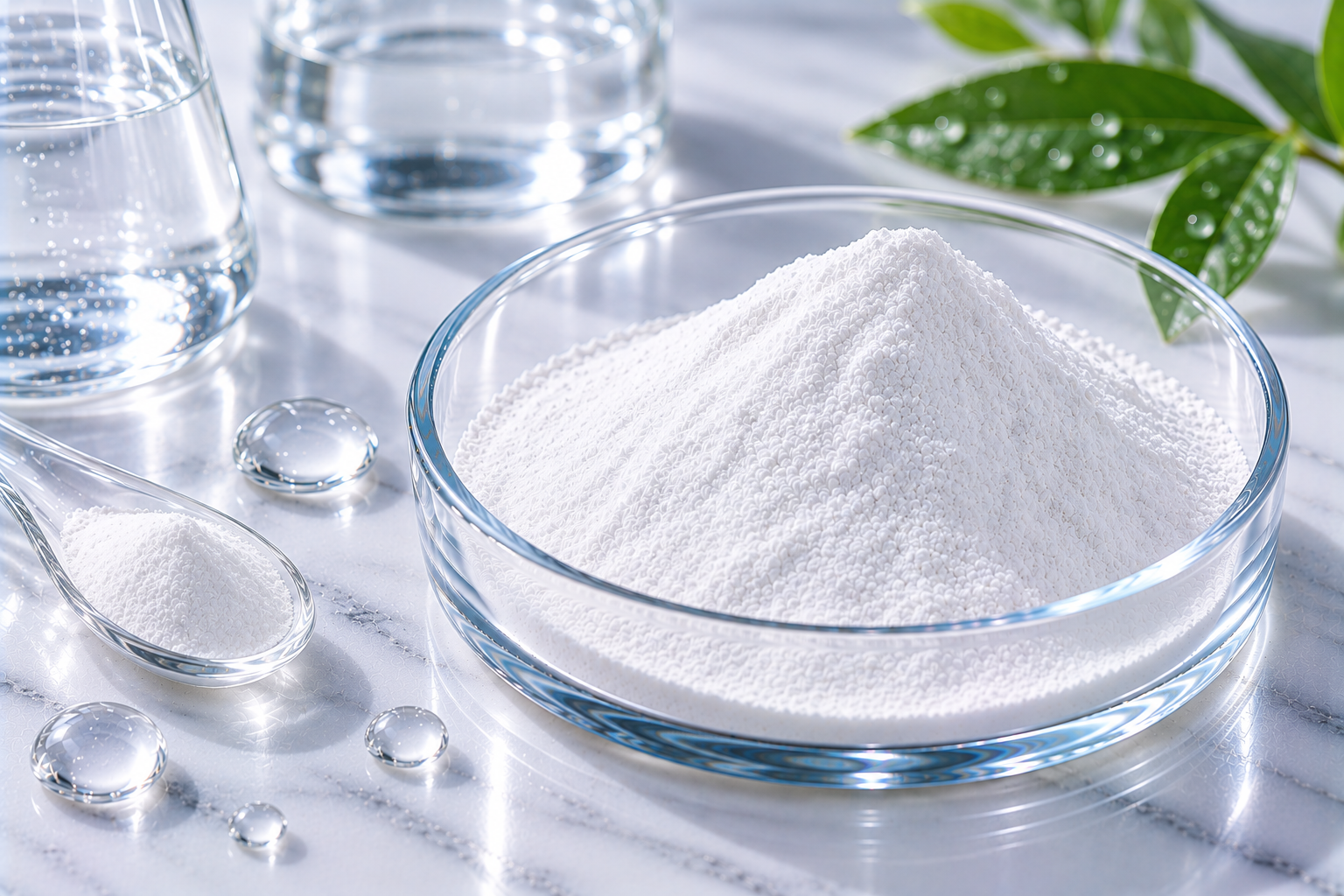
Sodium Hyaluronate is the sodium salt of hyaluronic acid and is one of the most widely used moisturizing and skin-conditioning ingredients in modern cosmetic formulations.
Its strong water-binding properties make it suitable for a broad range of hydration-focused skincare products, including serums, creams, lotions, masks and other personal care formulations.
Commercial Sodium Hyaluronate is available in different molecular weight ranges, allowing formulators to select an appropriate grade according to specific formulation and application requirements.
ProMaxBio supplies Sodium Hyaluronate for professional cosmetic formulation and commercial raw material sourcing, with different molecular weight grades and supporting quality documentation available upon request.
Key Features of Sodium Hyaluronate
Sodium Hyaluronate is widely used in cosmetic formulations because of its excellent water-binding and moisture-retention properties. As the sodium salt of hyaluronic acid, it is valued for its compatibility with many types of water-based skincare products.
Key formulation characteristics include:
- Moisture retention: Helps attract and retain water in cosmetic formulations.
- Skin conditioning: Commonly used in products designed to improve the appearance and feel of hydrated skin.
- Formulation versatility: Suitable for serums, creams, lotions, gels, masks, and other personal care products.
- Multiple molecular weight options: Different grades can be selected according to the desired formulation properties.
- Broad application potential: Can be incorporated into a variety of cosmetic product formats, subject to formulation testing.
Sodium Hyaluronate Molecular Weight Grades
Sodium Hyaluronate is commercially available in different molecular weight ranges. Molecular weight is an important consideration because it can influence viscosity, solution behavior, and the sensory characteristics of finished formulations.
High Molecular Weight Sodium Hyaluronate
Higher molecular weight grades are often selected for formulations where surface hydration, film-forming properties, and viscosity are important.
They may be considered for moisturizing creams, hydrating gels, and other skincare products.
Low Molecular Weight Sodium Hyaluronate
Lower molecular weight grades can offer different solution characteristics and may be useful in lightweight skincare formulations.
The appropriate grade should be selected based on the target product’s performance requirements and compatibility testing.
Selecting the Right Grade
When selecting Sodium Hyaluronate powder, formulators should consider:
- Target molecular weight range
- Desired viscosity
- Solubility and dispersion behavior
- Formulation pH
- Compatibility with other ingredients
- Processing conditions
- Finished-product stability
The exact molecular weight specifications and available grades should be confirmed with the supplier before formulation development.
Applications in Cosmetic Formulations
Sodium Hyaluronate is commonly used in a wide range of personal care products.
Facial Serums
Sodium Hyaluronate is frequently incorporated into hydrating facial serums designed to provide a smooth and moisturized skin feel.
Moisturizing Creams and Lotions
It can be used in creams and lotions to support moisture-focused formulation concepts.
Hydrating Masks
Sheet masks and gel masks may incorporate Sodium Hyaluronate as a skin-conditioning ingredient.
Eye Care Products
Sodium Hyaluronate may be considered for cosmetic eye-area formulations where hydration and a comfortable skin feel are desired.
Professional Skincare Formulations
Cosmetic manufacturers may select different Sodium Hyaluronate grades for specialized formulation requirements, subject to appropriate safety and performance evaluation.
Quality Control and Technical Specifications
For commercial cosmetic manufacturing, consistent raw material quality is essential.
When sourcing Sodium Hyaluronate, buyers should review the relevant technical specifications and supporting documentation.
Important quality considerations include:
- Ingredient identity
- Molecular weight distribution
- Assay or purity specifications
- Appearance and physical characteristics
- Microbiological quality
- Heavy metal limits
- Moisture content
- Applicable residual impurity testing
- Storage and packaging requirements
Testing requirements should be determined according to the intended cosmetic application and applicable regulatory standards.
Buyers are encouraged to request a batch-specific Certificate of Analysis (COA) and relevant technical documentation before placing commercial orders.
Sodium Hyaluronate Powder for B2B Buyers
For cosmetic ingredient distributors, skincare manufacturers, and contract formulators, choosing a suitable Sodium Hyaluronate supplier involves more than comparing prices.
Important purchasing considerations include raw material consistency, appropriate molecular weight specifications, technical documentation, packaging, and supply reliability.
Before confirming an order, buyers should clarify their required grade, intended application, estimated order quantity, and destination market.
These details help ensure that the selected material is suitable for the intended manufacturing process.
Request Sodium Hyaluronate from ProMaxBio
ProMaxBio supports professional sourcing of Sodium Hyaluronate and other cosmetic raw materials for skincare formulation and commercial manufacturing.
For information about available grades, technical specifications, quality documentation, samples, or bulk quotations, please contact our team.
Email: info@promaxbio.com
WhatsApp / WeChat: +86 173 9295 7286
Website: https://promaxbio.com
Ingredient Reference
For additional information about cosmetic ingredient nomenclature and regulatory reference data, consult the European Commission’s CosIng database:
European Commission – CosIng: https://ec.europa.eu/growth/tools-databases/cosing/
Product information is provided for professional ingredient evaluation. Final formulation suitability, safety, and regulatory compliance should be verified by the manufacturer.