
Product Overview
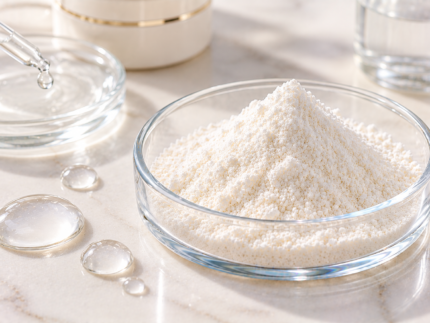
Saccharide Isomerate is a carbohydrate-derived humectant widely used in cosmetic formulations to help attract and retain moisture in the skin.
This moisturizing ingredient is valued for its water-binding characteristics and its suitability for a variety of skincare products, including facial moisturizers, hydrating serums, lotions, creams, and personal care formulations.
It has attracted interest among cosmetic formulators because of its potential to support long-lasting skin hydration and improve the sensory experience of moisturizing products.
For B2B cosmetic manufacturers, Saccharide Isomerate offers opportunities in hydration-focused skincare, skin barrier care, sensitive skin product development, and customized OEM cosmetic formulations.
ProMaxBio supplies Saccharide Isomerate for professional cosmetic ingredient sourcing and formulation development.
Product Specifications
| Parameter | Information |
|---|---|
| Product Name | Saccharide Isomerate |
| INCI Name | Saccharide Isomerate |
| CAS Number | 100843-69-4 |
| Ingredient Type | Carbohydrate-derived humectant |
| Function | Moisturizing / Humectant |
| Appearance | To be confirmed by batch specification |
| Active Content | To be confirmed |
| Product Composition | To be confirmed |
| Main Application | Cosmetic and personal care formulations |
The actual ingredient composition, concentration, appearance, and quality parameters should be confirmed using the supplier’s technical documentation and applicable Certificate of Analysis (COA).
Commercial Saccharide Isomerate ingredients may be supplied in different formulation systems, and their active content should not be assumed to be identical.
What Is Saccharide Isomerate?
It is a carbohydrate-derived cosmetic ingredient used primarily for its moisturizing properties.
As a humectant, it is incorporated into formulations designed to improve skin hydration and reduce the feeling of dryness.
Its hydrophilic characteristics make it relevant to water-based skincare formulations and emulsion systems.
Unlike ingredients used mainly to form an occlusive surface layer, Saccharide Isomerate is typically selected for its moisture-binding function.
The overall moisturizing performance of a finished product depends on ingredient concentration, formulation design, application conditions, and the presence of other moisturizing components.
Key Cosmetic Benefits
1. Long-Lasting Skin Hydration
It is used in skincare products designed to provide sustained moisturization.
Its moisture-binding properties make it relevant to formulations targeting dry or dehydrated skin.
Potential applications include:
- Daily facial moisturizers
- Hydrating serums
- Moisturizing lotions
- Overnight skincare products
- Intensive hydration creams
The duration and extent of hydration should be supported by appropriate testing of the finished cosmetic formulation.
2. Skin Barrier Care Formulations
Skin hydration is an important component of cosmetic barrier-care product development.
It may be incorporated into products designed to support a comfortable, moisturized skin appearance.
Manufacturers can evaluate it alongside barrier-oriented ingredients when developing formulations for dry or environmentally stressed skin.
Any claims relating to barrier improvement should be substantiated through suitable testing.
3. Dry Skin and Sensitive Skin Product Concepts
It may be considered for formulations intended for consumers seeking gentle, hydration-focused skincare.
Potential product concepts include:
- Sensitive skin moisturizers
- Dry skin facial creams
- Gentle hydrating lotions
- Daily barrier-care products
- Fragrance-free moisturizing formulations
Finished-product suitability for sensitive skin should be established through appropriate safety and tolerability testing.
4. Moisturizing Sensory Performance
The sensory characteristics of a moisturizing product can influence consumer acceptance.
It may be evaluated as part of a humectant system designed to balance hydration, texture, and skin feel.
The final sensory profile depends on the complete formulation rather than the ingredient alone.
Formulation Combinations
Saccharide Isomerate can be evaluated alongside other cosmetic ingredients to develop multi-functional moisturizing products.
Saccharide Isomerate + Sodium Hyaluronate
Sodium Hyaluronate is widely used in skincare formulations for its water-binding properties.
Combining Saccharide Isomerate with Sodium Hyaluronate may be considered for hydrating serums, moisturizing creams, and advanced hydration complexes.
Manufacturers should evaluate viscosity, compatibility, ingredient concentration, and the overall sensory performance of the finished product.
Saccharide Isomerate + Ectoine
Ectoine is used in cosmetic formulations designed around hydration and skin comfort.
A combination of Saccharide Isomerate and Ectoine may be explored in skincare products targeting dry or environmentally stressed skin.
This pairing is relevant to premium moisturizers, barrier-care serums, and sensitive skin product concepts.
Saccharide Isomerate + Ceramide NP
Ceramide NP is a lipid-based cosmetic ingredient commonly used in barrier-oriented skincare formulations.
Combining Saccharide Isomerate with Ceramide NP allows manufacturers to explore products incorporating both humectant and lipid-based formulation components.
Potential applications include moisturizing creams, barrier-care lotions, and premium facial products.
Saccharide Isomerate + Madecassoside
Madecassoside is a botanical-derived cosmetic active ingredient associated with skin comfort and soothing-oriented formulations.
Saccharide Isomerate may be evaluated alongside Madecassoside in products designed for hydration and gentle skincare.
Manufacturers should assess compatibility, stability, and the evidence supporting any proposed finished-product claims.
Saccharide Isomerate + Glycerin
Glycerin is a widely used cosmetic humectant.
A combination of Saccharide Isomerate and Glycerin may be considered when developing moisturizing systems with different humectant characteristics.
The optimal ratio depends on the target texture, desired skin feel, ingredient concentration, and finished-product performance.
Cosmetic Applications
Hydrating Facial Serums
Saccharide Isomerate may be incorporated into water-based serums designed for daily hydration.
Facial Moisturizers and Creams
The ingredient can be evaluated in moisturizing creams and emulsions intended for dry or dehydrated skin.
Skin Barrier Care Products
Saccharide Isomerate may be used alongside ceramides and other moisturizing ingredients in barrier-oriented cosmetic formulations.
Sensitive Skin Formulations
Hydration-focused products for sensitive skin may include Saccharide Isomerate, subject to suitable safety and tolerability evaluation.
Body Lotions
The ingredient may be considered for daily body moisturizing products and personal care emulsions.
Cleansing Products
Saccharide Isomerate may be evaluated in facial cleansers and other wash-off products designed around moisturizing ingredient concepts.
Formulation and Processing Considerations
Water Compatibility
Saccharide Isomerate is a hydrophilic ingredient generally suited to aqueous cosmetic systems.
The incorporation method should follow the actual supplier’s technical specification.
Recommended Use Level
The appropriate use concentration depends on the supplied grade, active content, formulation type, and intended product performance.
Manufacturers should refer to grade-specific technical documentation rather than assume a universal recommended concentration.
pH Compatibility
Formulation pH should be evaluated according to the ingredient grade and the requirements of the complete cosmetic system.
Ingredient Compatibility
Saccharide Isomerate may be combined with other humectants, emollients, polymers, and cosmetic active ingredients.
Compatibility testing should be conducted to assess texture, viscosity, stability, and appearance.
Stability
The finished formulation should be evaluated under appropriate temperature, storage, and packaging conditions.
Preservation
As with other water-containing cosmetic formulations, an appropriate preservation system and microbiological quality controls are important.
The preservative requirements depend on the complete formulation.
Quality Control
Consistent ingredient quality is important for cosmetic manufacturers.
Relevant quality-control parameters may include:
- Ingredient identity
- Active content
- Composition and carrier system
- Appearance
- pH, where applicable
- Microbiological quality
- Heavy metals, where applicable
- Preservative content, where applicable
- Batch traceability
- Packaging and storage conditions
The exact testing requirements depend on the commercial grade and intended application.
ProMaxBio welcomes inquiries regarding available technical specifications and batch-specific quality documentation.
Market Opportunities
Hydration-Focused Skincare
Moisturizing products remain an important category in cosmetic formulation development.
Saccharide Isomerate provides an ingredient option for manufacturers seeking carbohydrate-derived humectants.
Skin Barrier Care
Interest in barrier-oriented skincare has created opportunities for formulations combining humectants, lipids, and other cosmetic ingredients.
Saccharide Isomerate may be evaluated as part of these multi-ingredient systems.
Sensitive Skin Product Development
Manufacturers developing gentle moisturizing products may consider Saccharide Isomerate in formulations designed for skin comfort.
Premium Moisturizing Serums
Premium skincare brands may explore multi-humectant systems incorporating Saccharide Isomerate alongside Sodium Hyaluronate and other moisturizing ingredients.
OEM and Private Label Skincare
Contract manufacturers may consider Saccharide Isomerate in customized moisturizers, facial serums, creams, and body care products.
Commercial opportunities depend on formulation performance, ingredient specifications, regulatory requirements, and customer demand.
Safety and Regulatory Considerations
Before incorporating Saccharide Isomerate into a finished cosmetic product, manufacturers should confirm the ingredient’s regulatory status and suitability for the intended market.
Safety evaluation should consider the actual commercial grade, concentration, impurities, preservation system, and finished-product exposure conditions.
Claims relating to hydration duration, skin barrier improvement, or sensitive skin suitability should be supported by appropriate evidence.
Scientific References
Saccharide Isomerate is a carbohydrate-derived humectant used in cosmetic formulations designed to support skin hydration and moisturizing performance.
Scientific research on skin hydration, humectants, and stratum corneum water retention provides useful background for evaluating moisturizing ingredients and developing advanced skincare formulations.
For additional scientific literature related to Saccharide Isomerate and skin moisturization, explore relevant publications indexed in PubMed.
The moisturizing performance of Saccharide Isomerate depends on the commercial ingredient grade, concentration, formulation composition, and application conditions. Claims regarding long-lasting hydration or skin barrier improvement should be supported by appropriate ingredient-specific or finished-product testing.
Request a Quote
Looking for Saccharide Isomerate for moisturizing serums, facial creams, barrier-care formulations, or OEM skincare products?
Contact ProMaxBio to discuss product specifications, available technical documentation, minimum order quantities, pricing, and delivery requirements.
We welcome inquiries from cosmetic manufacturers, ingredient distributors, formulators, and other qualified B2B customers.