
Tetrahydrocurcumin (Purity ≥98.0%-99.0% HPLC / Non-Staining White Curcumin / Nano-Liposomal Options) | Gold Standard Colorless Phenolic Active for Tyrosinase Inhibition, Anti-Photoaging & Radical Quenching
1. Product Overview & Value Proposition
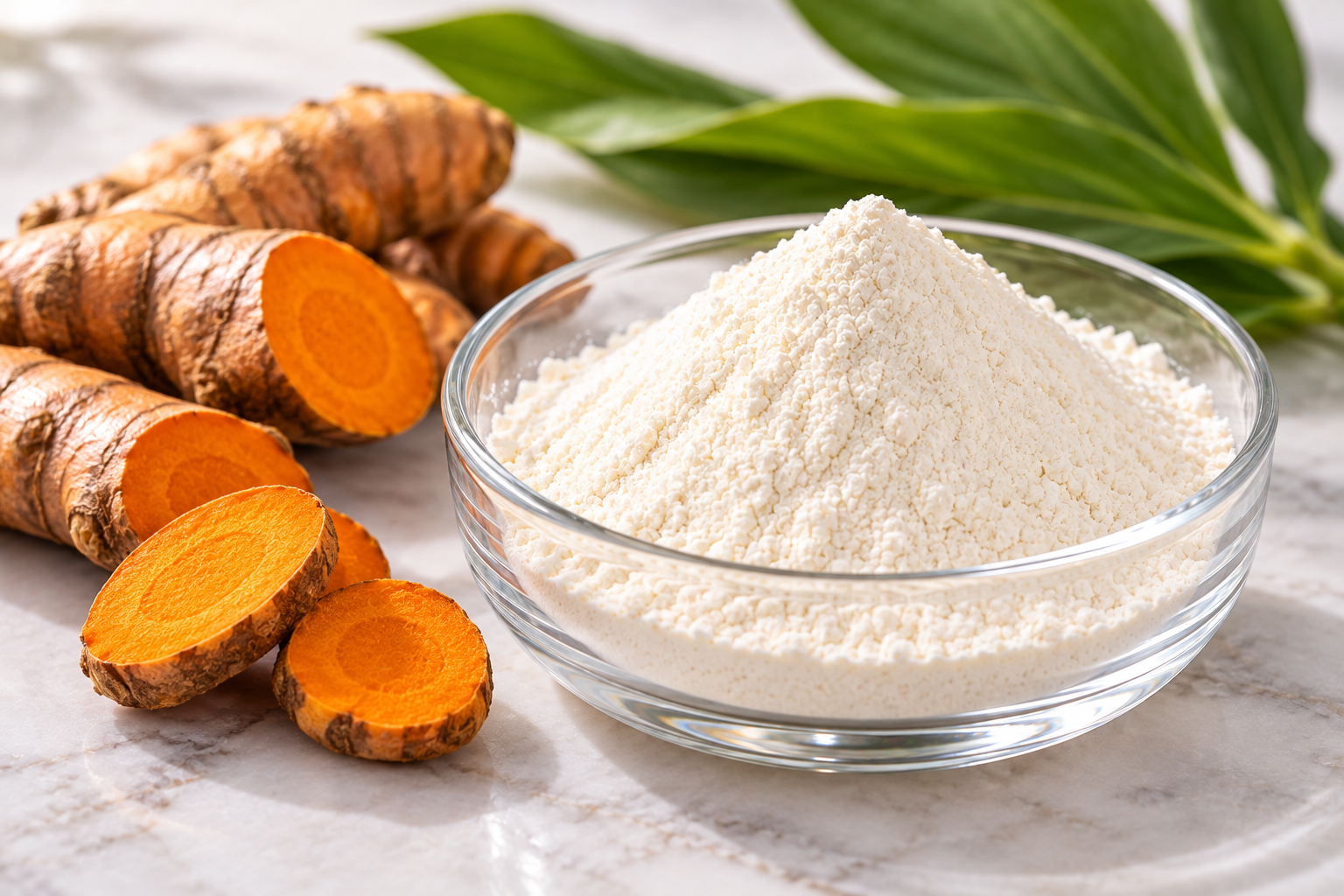
Tetrahydrocurcumin (1,7-bis(4-hydroxy-3-methoxyphenyl)heptane-3,5-dione, THC, 四氢姜黄素 / 白姜黄素), commercially celebrated under the trade benchmark SabiWhite, represents the premier clinical-grade natural diphenolic active in dermatological brightening, non-staining photoprotection, and advanced cellular longevity. While native curcumin derived from turmeric rhizomes (Curcuma longa L.) possesses well-documented antioxidant and anti-inflammatory properties, its vibrant bright yellow hue, irreversible staining of skin and clothing, poor chemical stability at physiological pH, and low cutaneous penetration have severely restricted its commercial utility in premium cosmetic formulations. Tetrahydrocurcumin powder overcomes every historical limitation of raw turmeric: through high-precision catalytic hydrogenation of the conjugated double bonds in the heptadiene backbone, curcumin is converted into a chemically stable, non-staining, snow-white crystalline molecule.
In cutaneous biochemistry and antioxidant kinetics, hydrogenating the α,β-unsaturated dienone bridge creates a flexible β-diketone linker flanked by two electron-rich guaiacol (o-methoxyphenol) rings. This structural alteration renders Tetrahydrocurcumin quantitatively more potent as a free-radical scavenger than parent curcumin, Vitamin C, and Vitamin E. In physiological skin assays, Tetrahydrocurcumin functions as a multifunctional active: first, it acts as a non-cytotoxic, competitive inhibitor of tyrosinase (exhibiting an IC50 significantly lower than kojic acid and arbutin), blocking both monophenolase and diphenolase catalytic cycles to suppress melanin synthesis without triggering melanocyte cell death; second, it intercepts singlet oxygen (¹O₂) and reactive oxygen species (ROS) induced by ultraviolet radiation (UVA/UVB), preventing cell-membrane lipid peroxidation and halting matrix metalloproteinase-1 (MMP-1) collagenase expression; third, it suppresses NF-κB and cyclooxygenase-2 (COX-2), calming post-inflammatory erythema (PIE), soothing sunburn inflammation, and preventing post-inflammatory hyperpigmentation (PIH). Crucially, its snow-white appearance ensures that finished cosmetic lotions, serums, and creams remain pristine and non-staining throughout shelf life. Our bulk Tetrahydropiperine active delivers verified performance across primary commercial sectors:
- Clinical High-Potency Brightening & Anti-Spot Serums: Outperforms kojic acid in clinical trials, fading stubborn solar lentigines, hormonal melasma, and post-acne dark marks at low usage rates (0.25% to 1.0%).
- Atmospheric Anti-Pollution & Anti-Photoaging Creams: Neutralizes airborne particulate matter (PM2.5) oxidative damage, inhibits cross-linking advanced glycation end-products (AGEs), and preserves dermal extracellular matrix collagen.
- Post-Acne PIE & Blemish Clarifying Emulsions: Synergizes with Niacinamide, Azelaic Acid derivatives, and Tetrahydropiperine (THP) to normalize sebum squalene oxidation, clear residual redness, and restore skin smoothness.
- Oral Dietary Longevity & Metabolic Supplements: The primary biologically active physiological metabolite of ingested curcumin, displaying superior intestinal absorption and bioavailability over native curcumin for liver protection and systemic cellular defense.
As an established bulk Tetrahydrocurcumin manufacturer and direct active ingredient supplier, our manufacturing facilities operate dedicated Curcuma longa extraction plants, closed-loop high-pressure catalytic hydrogenation suites, continuous column chromatography purification systems, and vacuum crystallization units. To empower agile skincare brands, formulation laboratories, and contract manufacturing organizations (CMOs), we pair uncompromising analytical quality with flexible commercial terms: accessible low MOQ procurement for benchtop pilot trials, multi-ingredient shipment consolidation across our cosmetic bioactives (Tetrahydropiperine, 4-Butylresorcinol, Phenylethyl Resorcinol 377, Alpha-Arbutin, Glabridin, Ferulic Acid, Phloretin, Ceramide NP, Madecassoside), and dedicated on-the-ground China-wide raw material sourcing assistance tailored to your exact manufacturing roadmap.
2. Product Specifications (Analytical Quality)
| Test Item | Standard Cosmetic Grade (≥95.0%) | Prestige Clinical Grade (≥98.0%) | Pharma / Reference Grade (≥99.0%) | Test Method |
|---|---|---|---|---|
| Chemical Identification | Conforms to authentic Tetrahydrocurcumin reference retention time, molecular mass (m/z 375.2 [M+H]&squo;) & FTIR spectrum | FTIR / HPLC-UV / ESI-MS / 1H-NMR | ||
| Tetrahydrocurcumin Assay | ≥ 95.00% (HPLC-UV, Dry Basis) | ≥ 98.00% (Clinical Target) | ≥ 99.00% (High-Purity Benchmark) | HPLC-UV (at 280 nm) |
| Unhydrogenated Curcumin Residue | ≤ 0.50% | ≤ 0.10% (1,000 ppm; Strictly Non-Staining) | ≤ 0.05% / Non-detectable | HPLC-UV (at 425 nm; Color Control) |
| Tetrahydrodemethoxycurcumin | ≤ 3.00% | ≤ 1.50% | ≤ 0.50% | HPLC-UV (at 280 nm) |
| Tetrahydrobisdemethoxycurcumin | ≤ 1.00% | ≤ 0.50% | ≤ 0.20% | HPLC-UV (at 280 nm) |
| Melting Point Range | 92.0°C – 96.0°C | 95.0°C – 98.0°C | 95.5°C – 98.0°C | Capillary Melting Apparatus |
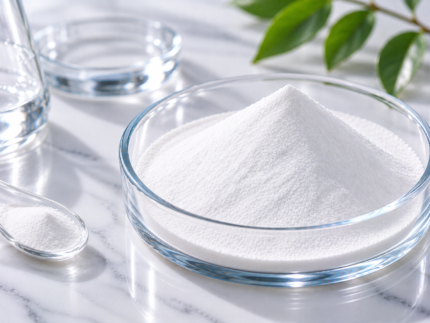
| Appearance & Color | Off-white to pale cream powder | Pure white to off-white microcrystalline powder | Pure snow-white microcrystalline powder | Visual / Organoleptic |
| Odor & Sensory Fingerprint | Practically odorless; neutral, clean sensory profile; zero pungent turmeric or solvent odor | Organoleptic | ||
| Solubility Profile | Practically insoluble in water (<0.1 g/L); freely soluble in ethanol, glycols, and cosmetic esters | USP <641> | ||
| Water-Soluble CWS Grade Option | Available as 5%–10% CWS / Nano-Liposomal Liquid (100% clear dissolution in water; NTU < 2.5) | Visual / Turbidimetry | ||
| Particle Size | 100% passing 80 mesh (Ultra-fine 100 mesh available for cold solubilization) | Sieve Analysis | ||
| Loss on Drying / Moisture | ≤ 0.50% | ≤ 0.20% | USP <731> (105°C) | |
| Residue on Ignition (Ash) | ≤ 0.10% | ≤ 0.05% | USP <281> (600°C) | |
| Heavy Metals (as Pb) | < 1.0 ppm (As < 1.0 ppm, Cd < 0.5 ppm, Hg < 0.1 ppm; Prop 65 compliant) | ICP-MS | ||
| Residual Catalyst (Palladium/Platinum) | Pd ≤ 5.0 ppm; Pt ≤ 5.0 ppm (Complies with ICH Q3D elemental impurity limits) | ICP-MS | ||
| Residual Solvents (Ethanol, Ethyl Acetate) | ≤ 3,000 ppm Ethanol; ≤ 1,000 ppm Ethyl Acetate (Meets USP <467>) | GC-HS | ||
| Microbiological Limits | Total Aerobic Microbial Count ≤ 100 CFU/g; Yeast & Mold ≤ 10 CFU/g; Pathogens Absent | USP/EP Standard | ||
3. Functional Applications (Mechanism of Action)
Deploying pharmaceutical-grade Tetrahydrocurcumin across clinical brightening serums, atmospheric photo-defense lotions, and anti-photoaging formulations delivers scientifically verified cellular actions:
- Competitive Tyrosinase Inhibition & Melanin Suppression: Tetrahydrocurcumin functions as a potent competitive inhibitor of human tyrosinase. Its dual phenolic hydroxyl groups on the guaiacol rings coordinate with the binuclear copper catalytic pocket of the enzyme, blocking both the hydroxylation of L-tyrosine (monophenolase action) and the oxidation of L-DOPA (diphenolase action). In human comparative trials, Tetrahydrocurcumin exhibited an IC50 for melanin suppression approximately eight-fold lower than kojic acid and thirty-fold lower than arbutin, without displaying melanocyte cytotoxicity.
- Dual-Phase Radical Scavenging & Lipid Peroxidation Defense: Tetrahydrocurcumin acts as an exceptional chain-breaking phenolic antioxidant. Because it contains both active phenolic hydroxyl groups and a flexible β-diketone moiety capable of keto-enol tautomerism, it easily donates hydrogen atoms to neutralize singlet oxygen (¹O₂), superoxide anions (O₂•⁻), and hydroxyl radicals. It prevents the auto-oxidation of squalene in sebum and shields cell membranes against lipid peroxidation with higher kinetic efficiency than alpha-tocopherol (Vitamin E).
- Suppression of NF-κB, COX-2 & Anti-Erythema Relief: Exposure to solar ultraviolet (UVB) radiation induces keratinocytes to phosphorylate IκBα, releasing nuclear factor kappa B (NF-κB) to drive pro-inflammatory gene transcription. Tetrahydrocurcumin directly inhibits NF-κB translocation, downregulating cyclooxygenase-2 (COX-2) and suppressing prostaglandin E2 (PGE2) synthesis. This calms post-procedure erythema, quenches sunburn flushing, and eliminates the inflammatory signals that trigger post-inflammatory hyperpigmentation (PIH).
- Matrix Metalloproteinase (MMP-1) & Collagenase Inhibition: Ultraviolet radiation and particulate environmental pollution trigger activator protein-1 (AP-1), prompting fibroblasts to release interstitial collagenase (MMP-1) and stromelysin. Tetrahydrocurcumin suppresses AP-1 DNA-binding activity, blocking the enzymatic degradation of type I and type III dermal collagen and preserving dermal matrix firmness.
- Anti-Glycation & Advanced Glycation End-Product (AGE) Blockade: Protein glycation occurs when reducing sugars react with amino groups on dermal collagen, forming stiff, fluorescent cross-linked Advanced Glycation End-products (AGEs) that cause skin yellowing and loss of elasticity. Tetrahydrocurcumin traps reactive dicarbonyl intermediates (methylglyoxal), inhibiting collagen cross-linking and rescuing skin from dull, sallow discoloration.
- Complete Non-Staining & Photochemical Color Stability: Unlike raw curcumin—which degrades rapidly into brown quinones and stains skin and manufacturing machinery with intense yellow pigment—Tetrahydrocurcumin is fully hydrogenated and colorless. It does not photo-isomerize under ambient sunlight or artificial light, allowing formulators to manufacture pure white, high-clarity lotions, creams, and serums with zero fabric-staining complaints.
4. Formulation Combinations & Trending Market Applications
Capitalize on the expanding clinical brightening, atmospheric anti-pollution, and clean cosmeceutical markets by formulating with our versatile Tetrahydrocurcumin portfolio:
- The Master Clinical “Ultimate Bio-Enhanced Brightening” Serum: Our Tetrahydrocurcumin (≥98.0%, 0.5%–1.0%) + Tetrahydropiperine (THP ≥98.0%, 0.05%–0.1%) + Niacinamide (≥99.5%, 3.0%–5.0%) + Ethyl Ascorbic Acid (Lipophilic Vitamin C, 2.0%) + Tranexamic Acid (USP, 2.0%). The globally recognized benchmark depigmentation matrix: Tetrahydropiperine fluidizes stratum corneum lipids to drive Tetrahydrocurcumin directly into basal melanocytes, Tranexamic Acid and Niacinamide halt upstream paracrine activation and melanosome transfer, and Vitamin C reduces existing oxidized pigment.
- The “Post-Acne PIE & PIH Clarifying” Night Fluid: Our Tetrahydrocurcumin (≥98.0%, 0.5%) + Azelaic Acid Derivative (Potassium Azeloyl Diglycinate, 3.0%) + Bakuchiol (≥99.0%, 0.5%) + Zinc PCA (1.0%) + Madecassoside 95% (0.2%). A targeted clarifying treatment designed to regulate sebum squalene oxidation, dissolve pore blockages, clear red post-acne marks (PIE), and erase stubborn brown acne scars (PIH).
- The “Atmospheric Anti-Pollution & Anti-Glycation” Barrier Cream: Our Tetrahydrocurcumin (≥98.0%, 0.5%) + Ectoine (≥99.0%, 1.0%) + Ceramide NP (≥98%, 0.2%) + L-Ergothioneine (≥99.0%, 0.1%) + Plant-Derived Squalane (5.0%). A daily environmental defense moisturizer engineered to neutralize airborne PM2.5 particulate oxidative stress, block protein glycation sallowness, and fortify the intercellular lipid moisture barrier.
- The High-Clarity “Radiant Glow” Essence Water: Our Water-Dispersible Nano-Liposomal Tetrahydrocurcumin (10% Active, 2.0% delivering 0.2% active) + Alpha-Arbutin (≥99.5%, 1.0%) + Multi-Molecular Weight Sodium Hyaluronate (0.5%) + Tremella Fuciformis Polysaccharide (0.5%) + Propanediol (5.0%). A crystal-clear, refreshing aqueous essence designed to deliver rapid skin-tone brightening, deep cellular hydration, and environmental antioxidant protection without cloudiness or sticky residue.
5. Why Choose Us As Your Long-Term Active Ingredient Partner?
- Flexible Low MOQ Policy: Mitigate product launch risk. As an agile low MOQ Tetrahydrocurcumin bulk supplier, our orders start as low as 100 g for ultra-pure clinical grades (≥98.0%–99.0%) and 500 g for standard cosmetic grade (≥95.0%), scaling smoothly up to recurring multi-ton commercial container contracts.
- Strict Yellow Curcumin Residual Control (≤ 0.10%): Residual unhydrogenated curcumin is the single biggest failure point in commercial white curcumin sourcing, as even trace amounts cause product yellowing and fabric staining. Our proprietary multi-stage crystallization process guarantees unhydrogenated curcumin remains strictly ≤ 0.10% (and ≤ 0.05% for premium grades), ensuring a pristine snow-white formulation appearance.
- Multi-Product Portfolio Consolidation: Streamline your procurement by sourcing your complete clinical active suite (Tetrahydrocurcumin, Tetrahydropiperine, 4-Butylresorcinol, Phenylethyl Resorcinol 377, Alpha-Arbutin, Glabridin, Ferulic Acid, Phloretin, Ceramide NP, Madecassoside, Palmitoyl Pentapeptide-4, Acetyl Hexapeptide-8, Copper Tripeptide-1), longevity vitamins (L-5-MTHF-Ca, β-NMN), and botanical extracts under a single, cost-effective freight shipment to reduce customs overhead and landed freight costs.
- Value-Added China Sourcing Service: In addition to our dedicated turmeric extraction lines, high-pressure catalytic hydrogenation suites, and vacuum crystallization plants, our on-the-ground technical team audits upstream agricultural cooperatives, validates HPLC purity testing paperwork, and procures specialized functional ingredients across China tailored to your exact manufacturing roadmap.
6. Quality & Supply Chain Assurance
- Natural Turmeric Extraction & Clean Catalytic Hydrogenation: Sourced strictly from verified sound rhizomes of *Curcuma longa* L. Natural curcumin is isolated to ≥95% before entering closed-loop, automated catalytic hydrogenation using pharmaceutical-grade catalysts under controlled hydrogen pressure.
- Catalyst Clearance & Trace Heavy-Metal Control: Following hydrogenation, crude Tetrahydrocurcumin undergoes sub-micron catalytic filtration and multi-stage solvent crystallization to ensure complete removal of heavy-metal catalysts (residual Palladium/Platinum ≤ 5 ppm), fully complying with ICH Q3D elemental impurity standards.
- Validated HPLC Analytical Standardization: Every commercial batch is tested against certified primary reference standards using High-Performance Liquid Chromatography (HPLC-UV at 280 nm and 425 nm). We quantify pure Tetrahydrocurcumin, monitor demethoxy derivatives, and strictly certify the absence of yellow unhydrogenated curcumin.
- Effortless Formulation Solubilization & Stability: With its melting point of 95°C–98°C, Tetrahydrocurcumin dissolves cleanly when pre-dissolved in cosmetic glycols (propanediol, butylene glycol, ethoxydiglycol) or warm cosmetic emollients (caprylic/capric triglyceride, C12-15 alkyl benzoate) at 60°C–70°C. It is photochemically stable, non-oxidizing, and will not cause formula yellowing or browning across pH 4.0 to 7.0.
- Comprehensive ICP-MS & Heavy Metal Screening: Batch-tested via high-resolution ICP-MS to ensure heavy metals (Lead, Arsenic, Cadmium, Mercury) strictly comply with California Prop 65, European Cosmetic Regulation (EC) No 1223/2009, and China Safety and Technical Standards for Cosmetics. Sealed in food/pharma-grade double-polyethylene liners within light-proof aluminum bottles (100 g, 500 g, 1 kg) and heavy-duty 25 kg fiber export drums.
7. FAQ
Q1: What is the primary difference between Curcumin and Tetrahydrocurcumin?
A1: While Tetrahydrocurcumin is derived directly from curcumin, their physical properties, formulation behaviors, and biological activities differ fundamentally:
- Curcumin: Possesses an extended conjugated heptadiene backbone with two double bonds (C21H20O6). It is an intense, bright orange-yellow powder that permanently stains clothing, skin, and manufacturing equipment. It is photolabile, degrades rapidly at physiological pH, and exhibits poor transdermal permeability.
- Tetrahydrocurcumin: The fully hydrogenated derivative (C21H26O6) where the conjugated double bonds have been saturated into single bonds. This converts the molecule into a pure white, non-staining crystalline powder. It is significantly more stable against oxidation and light, exhibits superior skin absorption, and demonstrates approximately three times higher antioxidant capacity and eight times greater tyrosinase-inhibition potency than native curcumin.
Q2: Why is Tetrahydrocurcumin often paired with Tetrahydropiperine (THP)?
A2: In cosmetic pharmacology, Tetrahydrocurcumin and Tetrahydropiperine represent the classic “Golden Synergistic Pair” (commercially modeled after SabiWhite + Cosmoperine). Tetrahydrocurcumin is an active depigmenting agent and antioxidant, but as a lipophilic crystal, its penetration through the stratum corneum is naturally rate-limited. Tetrahydropiperine fluidizes the intercellular lamellar lipid bilayers of the stratum corneum, creating temporary micro-conduits that increase the transdermal flux and cellular bio-accumulation of Tetrahydrocurcumin by over 30% to 50%, maximizing clinical brightening results at lower dosage levels.
Q3: How do formulators dissolve crystalline Tetrahydrocurcumin into skincare products?
A3: Pure Tetrahydrocurcumin crystals melt between 95°C and 98°C and are sparingly soluble in room-temperature water (<0.1 g/L). Formulators incorporate it cleanly using three standard techniques:
- Glycol Pre-Dissolution: Dissolve Tetrahydrocurcumin powder in 5%–10% cosmetic glycols (such as propanediol, 1,3-butylene glycol, or ethoxydiglycol) at 50°C–60°C, then blend into the emulsion oil phase or cool-down phase below 45°C.
- Oil Phase Solubilization: Dissolve directly into polar cosmetic emollients (caprylic/capric triglyceride, C12-15 alkyl benzoate, diisopropyl adipate) during the warm oil phase (60°C–70°C) prior to emulsification.
- Utilizing Water-Soluble Nano-Liposomal Liquids: For crystal-clear toners, hydrogels, and sheet masks, utilize our 5%–10% nano-liposomal liquid dispersion, which disperses instantly and transparently in cold water without heating or crystal precipitation.
Q4: What is the clinically supported usage percentage of Tetrahydrocurcumin in finished cosmetic formulations?
A4: Formulating percentages vary by delivery format and target clinical claim:
- Daily Facial Brightening & Anti-Spot Serums: 0.25% to 0.50% (delivers measurable reductions in hyperpigmentation and improves tone uniformity).
- Clinical Depigmentation Balms & Stubborn Melasma Correctors: 0.50% to 1.00% (often paired with 0.1% Tetrahydropiperine).
- Daily Environmental Anti-Pollution Creams: 0.20% to 0.50%.
- Aqueous Toners & Clear Sheet Masks: 1.0% to 2.0% of our water-dispersible nano-liposomal 10% liquid (yielding 0.1%–0.2% active).
- Formulating Window: Highly stable across a broad pH window of 4.0 to 7.0; stable when added during the cool-down phase (<45°C).
Q5: What is the MOQ for bulk Tetrahydrocurcumin orders?
A5: We support agile product commercialization with flexible minimum order quantities starting from just 100 g for ultra-pure clinical grades (≥98.0%–99.0%) and 500 g for standard cosmetic grade (≥95.0%), scaling smoothly up to recurring multi-ton commercial container contracts.
8. References
- PubChem: Tetrahydrocurcumin Compound Summary (CID 9794719) – National Center for Biotechnology Information.
- PubMed Central: Tetrahydrocurcumin: A Review of Its Chemical Synthesis, Enhanced Bioavailability, and Diverse Dermatological Applications in Skin Whitening and Photoprotection – National Institutes of Health research database.
Keywords you may search: bulk Tetrahydrocurcumin supplier, white curcumin manufacturer, tetrahydrocurcumin powder 98 percent HPLC, non-staining turmeric extract, SabiWhite alternative raw material, tyrosinase inhibitor cosmetic active, nano liposomal tetrahydrocurcumin liquid, anti photoaging skin brightening raw material, low MOQ cosmetic raw material provider, custom China ingredient sourcing service, pure tetrahydrocurcumin bulk