
1. Product Overview
Ubiquinol is the active, reduced, and electron-rich form of Coenzyme Q10 (CoQ10). In a healthy human body, the vast majority of circulating CoQ10 naturally exists as Ubiquinol to neutralize free radicals and drive cellular ATP energy synthesis within mitochondria.
Unlike traditional oxidized CoQ10 (Ubiquinone), Ubiquinol is pre-converted and highly bioavailable. It bypasses the metabolic conversion steps required in the digestive tract, ensuring rapid cellular uptake and superior antioxidant defense. It serves as the premier active raw material for high-end anti-aging, cardiovascular, and mitochondrial wellness formulations.
2. Product Specifications
| Parameter | Specification Standards | Test Method |
|---|---|---|
| Chemical Name | Reduced Coenzyme Q10 (Ubiquinol-10) | USP / Identification |
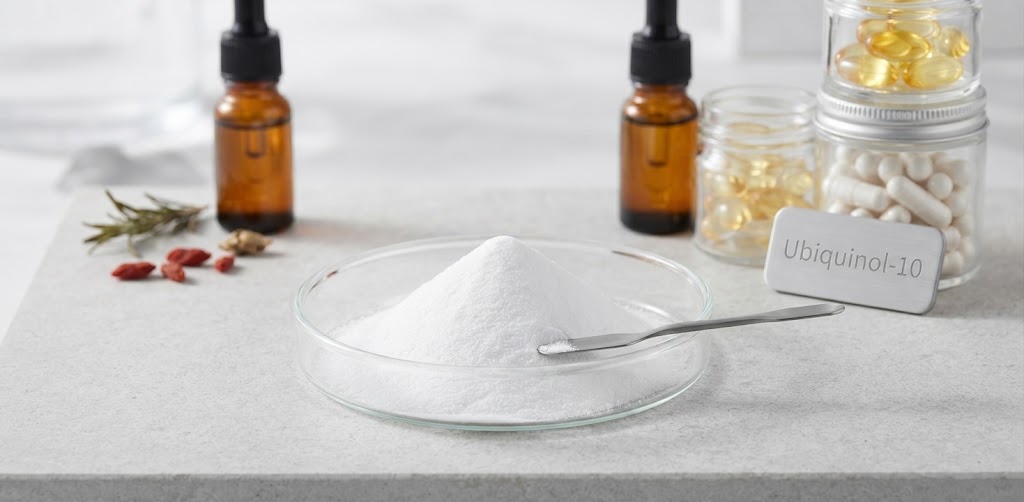
| Appearance | Whitish to off-white fine crystalline powder | Visual Inspection |
| Assay (HPLC) | ≥ 98.0% | High-Performance Liquid Chromatography |
| Loss on Drying | ≤ 0.5% | Gravimetric Analysis |
| Heavy Metals (as Pb) | ≤ 10 ppm | ICP-MS |
| Total Plate Count | ≤ 1,000 CFU/g | Microbial Limit Test |
3. Functional Applications
- Mitochondrial Energy Production: Powers high-demand organs such as the heart, brain, and skeletal muscles by optimizing ATP synthesis.
- Advanced Cellular Anti-Aging: Neutralizes intracellular free radicals directly, protecting cell membranes and DNA from oxidative damage.
- Senior Health & Longevity: Specially formulated for aging demographics whose natural ability to synthesize and convert CoQ10 declines significantly.
- Elite Sports Nutrition: Accelerates post-exercise muscle recovery and reduces exercise-induced oxidative stress.
4. Formulation Combinations
To maximize efficacy and create standout product concepts, Ubiquinol can be powerfully synergized with:
- Reduced Coenzyme Q10 + PQQ (Pyrroloquinoline Quinone): The ultimate synergistic stack for stimulating mitochondrial biogenesis and cognitive health.
- Reduced Coenzyme Q10 + Shilajit: Enhances cellular energy output and stabilizes Ubiquinol against premature degradation.
- Reduced Coenzyme Q10 + Omega-3 Fish Oil / MCT Oil: Provides an ideal lipid matrix for softgel encapsulation, maximizing lipid-based intestinal absorption.
5. Market Opportunities
The global supplement market is experiencing a decisive shift from standard oxidized CoQ10 toward high-bioavailability Ubiquinol. Brand owners and formulators leverage Ubiquinol to capture premium, high-margin segments in anti-aging, fertility support, and advanced cardiovascular health lines, appealing directly to discerning consumers willing to pay for proven superior absorption.
6. Quality & Supply
Promaxbio guarantees rigorous quality assurance across every batch:
- Compliance: Manufactured under strict cGMP guidelines with full HPLC assay verification and batch-specific Certificate of Analysis (COA).
- Packaging & Protection: Packaged in food-grade aluminum foil bags flushed with nitrogen gas, sealed inside rigid fiber drums to guarantee absolute oxygen and light barrier protection during global transport.
- Storage: Store below 20°C in a cool, dry, dark environment in tightly sealed containers.
7. Frequently Asked Questions (FAQ)
Q1: What is the main difference between Ubiquinone and Ubiquinol?
A: Ubiquinone is the oxidized, yellow crystalline form that requires enzymatic conversion in the digestive tract. Ubiquinol is the reduced, white powder form that is already active, offering significantly higher bioavailability without needing bodily conversion.
Q2: Can Ubiquinol be easily encapsulated into softgels?
A: Yes. Because Ubiquinol is sensitive to oxygen, it is best encapsulated in softgels using protective carrier oil matrices (such as MCT oil or d-alpha-tocopherol) under nitrogen-purged manufacturing conditions to ensure optimal shelf-life stability.
Scientific References
The following publications provide scientific background on ubiquinol, the reduced form of Coenzyme Q10, with a focus on bioavailability, stability, and formulation development.
- Mantle D, Dybring A. Bioavailability of Coenzyme Q10: An Overview of the Absorption Process and Subsequent Metabolism. Antioxidants. 2020. https://pmc.ncbi.nlm.nih.gov/articles/PMC7278738/
- Zhang Q, et al. The Cocrystal of Ubiquinol: Improved Stability and Bioavailability. Pharmaceutics. 2023. https://pmc.ncbi.nlm.nih.gov/articles/PMC10610044/
- Stability of Reduced and Oxidized Coenzyme Q10 in Finished Products. https://pmc.ncbi.nlm.nih.gov/articles/PMC7997171/
These references provide technical context for ingredient sourcing, stability evaluation, and formulation development. Actual ingredient specifications and stability should be verified using supplier documentation and product-specific analytical data.