
Natural Astaxanthin (Oleoresin Oil ≥5.0%-10.0% / CWD Beadlets ≥2.0%-5.0% HPLC / Haematococcus pluvialis) | Gold Standard Transmembrane Carotenoid for Cellular Longevity, Vision Accommodation & Nutricosmetics
1. Product Overview & Value Proposition
Natural Astaxanthin (3,3′-dihydroxy-β,β-carotene-4,4′-dione, 天然虾青素), biosynthesized by the freshwater unicellular microalga Haematococcus pluvialis as an environmental survival shield against ultraviolet irradiation and nutrient deprivation, is recognized in nutritional pharmacology and geroscience as nature’s premier cellular antioxidant. While belonging to the xanthophyll carotenoid family alongside lutein and zeaxanthin, Astaxanthin possesses a distinctive structural configuration: two terminal β-ionone rings, each containing both a hydroxyl (-OH) and a ketone (=O) oxygenated functional group linked by an extended central polyene chain of 13 conjugated double bonds. This functional biochemistry confers a unique physical quenching rate against high-energy singlet oxygen (¹O₂), demonstrating antioxidant potency approximately 6,000 times greater than Vitamin C, 800 times greater than Coenzyme Q10, and 550 times greater than alpha-tocopherol (Vitamin E).
Crucially, Astaxanthin’s therapeutic performance stems from its transmembrane spanning orientation. Hydrocarbon carotenoids (such as beta-carotene and lycopene) bury horizontally within the hydrophobic inner core of cellular membranes, potentially increasing membrane fluidity and lipid susceptibility to peroxidation. Water-soluble antioxidants (such as Vitamin C) reside solely in aqueous intracellular or extracellular compartments. In contrast, Astaxanthin’s polar terminal rings anchor precisely into both the outer and inner hydrophilic heads of the phospholipid bilayer, while its conjugated polyene backbone spans the non-polar hydrophobic core. This vertical bridge allows Astaxanthin to scavenge free radicals simultaneously within both aqueous and lipid phases without disrupting membrane structure or displaying pro-oxidant behavior. Beyond general cellular defense, Astaxanthin delivers verified clinical efficacy across key commercial product sectors:
- Clinical Ophthalmic & Digital Screen Asthenopia Formulations: Readily crosses the blood-retinal barrier (BRB) to accumulate in the ciliary body. Relaxes the ciliary muscle from tonic accommodation spasm, improves retinal capillary microcirculation, speeds accommodation recovery, and relieves subjective digital eye strain.
- Nutricosmetics & Oral Photoprotection Elixirs: Protects dermal fibroblasts against ultraviolet-induced reactive oxygen species, downregulates matrix metalloproteinases (MMP-1, MMP-13) to preserve collagen and elastin architecture, reduces transepidermal water loss (TEWL), and improves skin elasticity.
- Mitochondrial Sports Performance & Lactic Acid Recovery: Concentrates in inner mitochondrial membranes to shield complex I–IV electron transport proteins from exercise-induced oxidative damage, accelerating fatty acid utilization and lowering blood lactate accumulation.
- Cardiovascular Endothelial Integrity & Nitric Oxide Preservation: Inhibits low-density lipoprotein (LDL) oxidation, lowers vascular inflammatory cytokines (hs-CRP, TNF-α), and upregulates endothelial nitric oxide synthase (eNOS) to preserve arterial flow-mediated dilation (FMD).
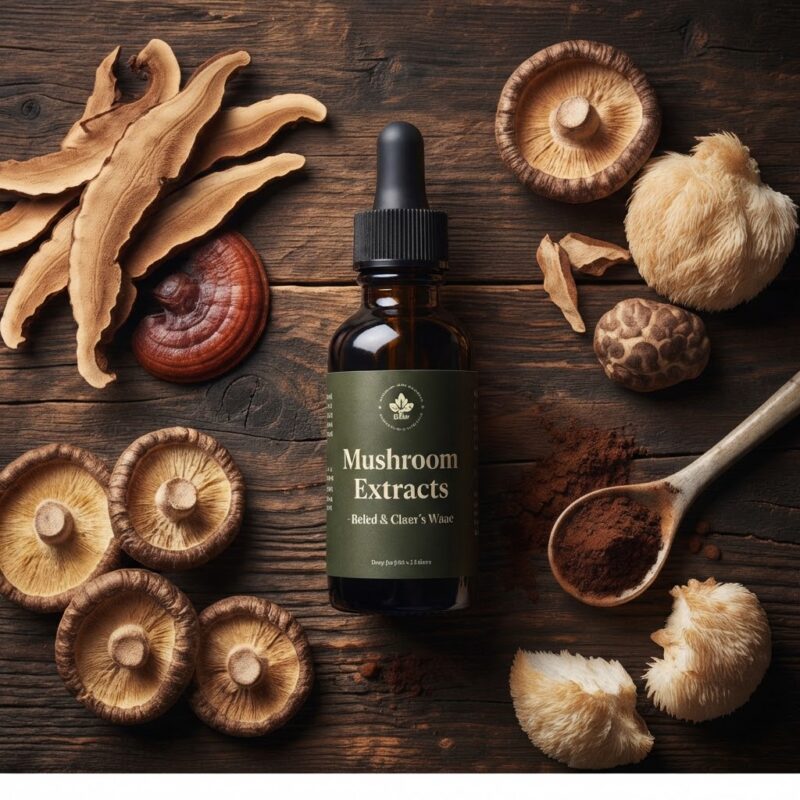
- Functional “Mushroom Coffee” & Adaptogenic Drink Sticks: Available in microencapsulated, cold-water-dispersible (CWD) beadlets that dissolve smoothly into functional coffees, matcha, and beverage stick packs, contributing a radiant reddish-amber hue and cellular protection without a fishy aroma.
As an established bulk Natural Astaxanthin manufacturer and direct active ingredient supplier, we cultivate Haematococcus pluvialis in closed, contaminant-free glass tubular photobioreactors, followed by red-stage maturation, high-pressure cell-wall crushing, and closed-loop supercritical carbon dioxide (SC-CO₂) extraction. To empower agile brands and contract manufacturing organizations (CMOs), we pair uncompromising analytical quality with flexible commercial terms: accessible low MOQ procurement for benchtop pilot trials, multi-ingredient shipment consolidation across our eye health carotenoids (Lutein, Zeaxanthin), botanicals (Bilberry, Grape Seed), and longevity vitamins, and dedicated on-the-ground China-wide raw material sourcing assistance tailored to your exact manufacturing requirements.
2. Product Specifications (Analytical Quality)
| Test Item | CWD Beadlets (2.5% Powder) | Lipophilic Oleoresin Oil (10%) | High-Assay Oleoresin Oil (20%) | Test Method |
|---|---|---|---|---|
| Botanical / Algal Identification | Conforms to authentic Haematococcus pluvialis chromatogram and characteristic UV-Vis spectrum | USP <197U> / HPLC-DAD / Microscopic morphology | ||
| Total Astaxanthin Assay | ≥ 2.50% (HPLC-UV) | ≥ 10.00% (HPLC-UV) | ≥ 20.00% (Clinical Benchmark) | HPLC-UV (USP method post-enzymatic cleavage) |
| Esterified Astaxanthin Distribution | Monoesters 70.0%–80.0%; Diesters 10.0%–20.0%; Free Astaxanthin ≤ 5.0% | HPLC-DAD (Intact ester profiling) | ||
| Chiral Enantiomer Ratio | (3S,3’S) isomer ≥ 90.0% of total astaxanthin (Zero synthetic meso-form) | Chiral HPLC (Daicel Chiralpak) | ||
| Cell-Wall Cracking Rate | ≥ 95.00% (High-pressure homogenization ensures maximum bioavailability) | Microscopic Cell Count | ||
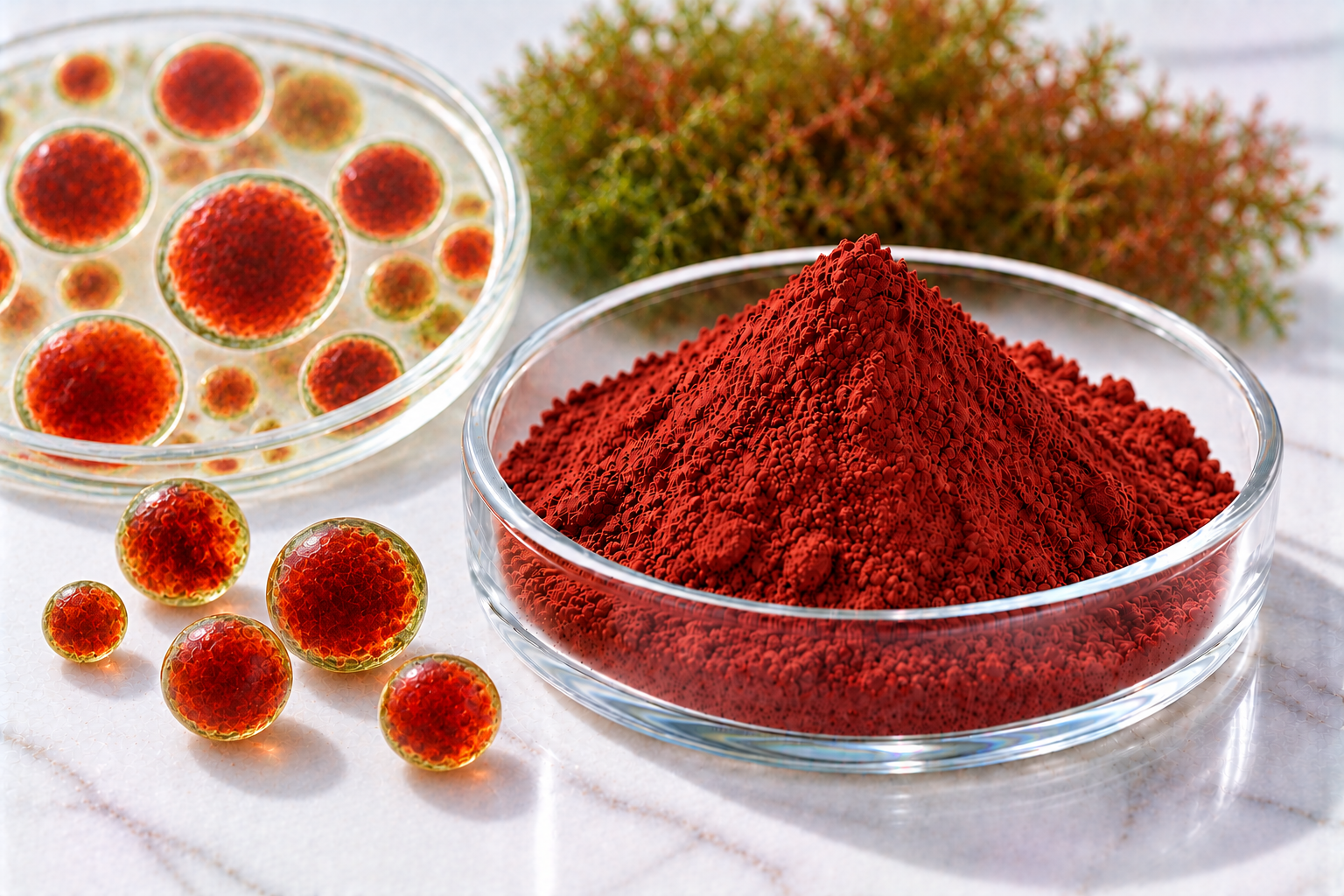
| Appearance & Color | Dark violet-red free-flowing micro-beadlets | Dark reddish-black viscous oleoresin oil | Deep purple-black thick viscous resin | Visual / Organoleptic |
| Odor & Taste | Characteristic mild seaweed/microalgal aroma; neutral, clean taste; zero rancidity | Organoleptic | ||
| Dispersibility & Solubility | 100% cold-water-dispersible (Stable scarlet-red emulsion) | Lipophilic (freely miscible in vegetable oils, MCT, lipids) | Visual / Turbidimetry | |
| Particle Size | 100% passing 20 mesh; ≥90% passing 40 mesh | N/A (Liquid oleoresin) | Sieve Analysis | |
| Loss on Drying / Moisture | ≤ 8.00% | ≤ 1.00% (Karl Fischer) | USP <731> / Karl Fischer | |
| Peroxide Value (POV) | ≤ 5.0 meq O₂/kg | ≤ 5.0 meq O₂/kg | USP <401> Titration | |
| Heavy Metals (Pb) | < 1.0 ppm (As < 1.0 ppm, Cd < 0.5 ppm, Hg < 0.1 ppm; Prop 65 compliant) | ICP-MS | ||
| Residual Solvents (Ethanol, Hexane) | Zero petro-solvents (Supercritical CO₂ extraction; meets USP <467>) | GC-HS | ||
| Microbiological Limits | Total Aerobic Microbial Count ≤ 1,000 CFU/g; Yeast & Mold ≤ 100 CFU/g; Pathogens Absent | USP/EP Standard | ||
3. Functional Applications (Mechanism of Action)
Deploying natural microalgae-derived Astaxanthin across clinical ophthalmic formulations, nutricosmetics, and sports performance products delivers scientifically verified physiological mechanisms:
- Transmembrane Bilayer Bridging & Radical Neutralization: Astaxanthin’s exact molecular length (~3 nm) precisely spans the mammalian cellular phospholipid bilayer. Its polar ionone rings reside in the outer and inner hydrophilic head zones, while the long polyene backbone anchors in the non-polar hydrophobic middle. This configuration intercepts reactive oxygen species (ROS) both inside and outside the cell membrane, stabilizing membrane fluidity and preventing mitochondrial lipid peroxidation without pro-oxidant decay.
- Ciliary Muscle Spasm Relief & Retinal Accommodation: Prolonged focusing on computer monitors, tablets, and smartphones causes sustained contraction of the eye’s ciliary muscle, leading to accommodation spasm, blurred vision, and ocular fatigue (asthenopia). Astaxanthin crosses the blood-retinal barrier to accumulate in the ciliary body. By quenching localized free radicals, downregulating inflammatory cytokines, and increasing retinal capillary blood flow, it accelerates accommodative recovery time and relieves digital eye strain.
- Skin Photoprotection & Collagen Degradation Suppression: Solar ultraviolet (UVA/UVB) radiation induces activator protein-1 (AP-1), which triggers matrix metalloproteinases—specifically MMP-1 (interstitial collagenase) and MMP-13—to degrade structural dermal collagen. Oral Astaxanthin accumulates in the epidermal and dermal layers, neutralizing UV-induced singlet oxygen, preserving type I collagen fibers, reducing transepidermal water loss (TEWL), and smoothing fine lines and crow’s feet.
- Mitochondrial Respiratory Chain Protection & Athletic Stamina: Astaxanthin accumulates in the inner mitochondrial membranes of skeletal myocytes and cardiomyocytes, shielding carnitine palmitoyltransferase-1 (CPT-1) and electron transport chain complexes from oxidative breakdown. This enhances mitochondrial lipid beta-oxidation during exercise, preserves intramuscular glycogen reserves, and lowers blood lactate accumulation, accelerating athletic recovery.
- Cardiovascular Endothelial Flow & Nitric Oxide Bioavailability: Protects vascular endothelial cell membranes from oxidative stress, enhancing basal endothelial nitric oxide synthase (eNOS) phosphorylation. This preserves endogenous nitric oxide (NO) bioavailability, maintains vascular flow-mediated dilation (FMD), and prevents the oxidative conversion of LDL into atherogenic oxidized LDL (ox-LDL).
- Vibrant Scarlet-Red Crema in Functional “Mushroom Coffee”: Microencapsulated CWD Astaxanthin beadlets disperse cleanly in hot coffee, cocoa, and functional mushroom extracts (like Cordyceps and Lion’s Mane). It contributes an appealing reddish-amber crema, withstands boiling brewing temperatures, and provides daily cellular antioxidant protection without altering coffee flavor or mouthfeel.
4. Formulation Combinations & Trending Market Applications
Capitalize on the expanding vision wellness, nutricosmetic beauty-from-within, and athletic longevity markets by formulating with our versatile Astaxanthin portfolio:
- The Master Clinical “Ophthalmic Accommodation & Macular Triad” Softgel: Our Natural Astaxanthin (10% Oleoresin Oil, 40 mg delivering 4 mg active astaxanthin) + Lutein (20% Oil Suspension, 50 mg delivering 10 mg active free lutein) + Zeaxanthin (20% Oil Suspension, 10 mg delivering 2 mg active free zeaxanthin, establishing the 5:1 AREDS2 ratio) + Bilberry Extract (Anthocyanins 36% UV, 100 mg) + Zinc Glycinate (15 mg elemental Zn). The globally recognized benchmark vision matrix: Astaxanthin eases ciliary muscle accommodation and dry-eye fatigue, Lutein and Zeaxanthin filter phototoxic blue light in the macula, and Bilberry accelerates rhodopsin resynthesis.
- The Nutricosmetic “Youth Glow & Collagen Photoprotection” Elixir / Softgel: Our Natural Astaxanthin (10% Oleoresin Oil, 60 mg delivering 6 mg active astaxanthin) + Hydrolyzed Marine Collagen Peptides (3,000–5,000 mg) + L-Ergothioneine (≥99%, 5 mg) + Sodium Hyaluronate (Food Grade, 100 mg) + Natural Vitamin E (d-alpha tocopherol, 50 IU). A clinical beauty-from-within formulation designed to shield dermal collagen from UV-induced MMP degradation, restore epidermal moisture barrier function, and enhance skin elasticity.
- The Mitochondrial Energy & Athletic Endurance Pre-Workout Stack: Our Astaxanthin (CWD Beadlets 2.5%, 160 mg delivering 4 mg astaxanthin) + Coenzyme Q10 (Ubiquinol 98%, 100 mg) + Cordyceps Militaris Extract (Cordycepin 1%, 300 mg) + Alpha-Lipoic Acid (ALA 300 mg) + L-Carnitine L-Tartrate (1,000 mg). A non-stimulant performance formula engineered to protect mitochondrial electron transport chains, increase skeletal muscle fat oxidation, and delay exercise-induced lactic acid accumulation.
- The Trending “Vision Focus” Morning Mushroom Coffee Stack: Our Water-Dispersible CWD Astaxanthin Beadlets (2.0%, 200 mg delivering 4 mg active astaxanthin) + Lion’s Mane Mushroom Extract (Beta-Glucan 30%, 300 mg) + Cordyceps Militaris Extract (Cordycepin 1%, 300 mg) + Micro-Ground Arabica Coffee. An elite functional morning brew engineered to support sustained executive focus, protect eyes from all-day screen fatigue, and provide clean, jitter-free adaptogenic stamina throughout the workday.
5. Why Choose Us As Your Long-Term Carotenoid Active Partner?
- Flexible Low MOQ Policy: Mitigate product development risk. As an agile low MOQ Astaxanthin bulk supplier, our orders start as low as 1 kg for standardized CWD beadlets (1%–5%) and lipophilic oleoresin oils (5%–20%), scaling smoothly up to recurring multi-ton commercial container contracts.
- 100% Closed Glass Photobioreactor Cultivation: We cultivate *Haematococcus pluvialis* in sealed glass tubular photobioreactors, fully isolating the microalgae from airborne environmental contaminants, agricultural dust, and biological pests. This guarantees an ultra-pure, identity-preserved algal biomass free from adulterants or industrial pollutants.
- Multi-Product Portfolio Consolidation: Streamline your supply chain by sourcing your complete vision and longevity suite (Astaxanthin, Lutein, Zeaxanthin, Bilberry, Lycopene, Ergothioneine), functional mushrooms (Lion’s Mane, Cordyceps, Reishi), and longevity vitamins (β-NMN, L-5-MTHF-Ca) under a single, cost-effective freight shipment to reduce customs overhead and landed freight costs.
- Value-Added China Sourcing Service: In addition to our dedicated microalgae cultivation facilities and supercritical CO₂ extraction lines, our on-the-ground technical team audits regional production bases, validates HPLC ester-profiling and chiral-isomer testing paperwork, and procures specialized functional ingredients across China tailored to your exact manufacturing roadmap.
6. Quality & Supply Chain Assurance
- Supercritical CO₂ Solvent-Free Extraction: Extracted using pharmaceutical-grade supercritical carbon dioxide (SC-CO₂) fluid extraction. This low-temperature, oxygen-free process prevents thermal degradation of delicate polyene bonds and completely eliminates petrochemical solvents (such as hexane, acetone, or ethanol), leaving zero chemical solvent residues.
- High-Efficiency Cell-Wall Cracking (≥95%): The thick, durable sporopollenin wall of resting *H. pluvialis* aplanospores prevents enzymatic digestion in the human gastrointestinal tract. We utilize low-temperature, ultra-high-pressure homogenization to achieve a cell-wall cracking rate ≥ 95%, ensuring maximum intestinal bioavailability.
- Chiral HPLC Stereochemical Authentication: Synthetic astaxanthin derived from petrochemical precursors consists of a racemic mixture of (3S,3’S), (3R,3’S-meso), and (3R,3’R) isomers in an approximate 1:2:1 ratio. Authentic microalgal Astaxanthin produces exclusively the (3S,3’S) stereoisomer. We test every commercial batch via Chiral-Phase HPLC to verify natural biological identity and screen out synthetic substitutes.
- Advanced Microencapsulation Beadlet Technology: Native free astaxanthin oxidizes rapidly when exposed to air and light. Our CWD beadlets encapsulate micronized astaxanthin oleoresin inside a modified food starch and acacia matrix with natural antioxidants (dl-alpha tocopherol and sodium ascorbate), ensuring stability during high-pressure direct tableting and instant cold-water dispersibility.
- Strict Heavy Metal & Contaminant Screening: Batch-tested via high-resolution ICP-MS and GC-MS/MS to ensure heavy metals (Lead, Arsenic, Cadmium, Mercury) and agrochemical residues strictly comply with California Prop 65, USP <561>, and European Union food supplement pharmacopeial standards. Sealed in light-proof, nitrogen-flushed aluminum bottles (1 kg, 5 kg) and heavy-duty 25 kg fiber export drums.
7. FAQ
Q1: What is the biological and clinical difference between Natural Astaxanthin and Synthetic Astaxanthin?
A1: Natural Astaxanthin and petrochemical-derived synthetic astaxanthin differ fundamentally in molecular form, stereochemistry, and safety:
- Natural Astaxanthin (Haematococcus pluvialis): 100% pure (3S,3’S) stereoisomer, occurring in a natural esterified matrix (mono- and diesters bound to fatty acids). This esterification makes the molecule significantly more stable against oxidation and delivers up to 20 to 50 times greater antioxidant and cellular uptake capacity than synthetic forms. Authorized globally for human dietary supplements.
- Synthetic Astaxanthin: Synthesized from petrochemical precursors (petroleum feedstocks). It exists as a free, unesterified molecule in a racemic stereoisomeric blend ((3S,3’S), (3R,3’S-meso), and (3R,3’R)). Synthetic astaxanthin is primarily approved as an animal feed pigmentation additive (e.g., for farmed salmon) and lacks the clinical safety and efficacy documentation required for premium human nutrition.
Q2: Why is Natural Astaxanthin predominantly esterified, and how does this affect bioavailability?
A2: In wild *Haematococcus pluvialis*, astaxanthin is biosynthesized and linked to fatty acids (forming monoesters and diesters). These ester bonds stabilize the keto-carotenoid against environmental light and oxygen degradation. In the human digestive tract, dietary lipases naturally cleave these fatty acids, releasing free astaxanthin for incorporation into mixed micelles and intestinal absorption. Once absorbed, it is transported via chylomicrons and HDL directly to target tissues (retina, brain, skin, muscles).
Q3: How does Astaxanthin relieve digital screen eye strain and blurred vision?
A3: Digital eye strain (asthenopia) is primarily caused by prolonged contraction of the eye’s ciliary muscle as it forces the lens to focus on nearby computer screens or smartphones. This continuous muscular strain causes oxidative stress, microvascular constriction, and accommodation fatigue. Astaxanthin crosses the blood-retinal barrier to accumulate in the ciliary body. By quenching localized free radicals and improving blood perfusion in retinal and ciliary capillaries, it relaxes the ciliary muscle, accelerates visual accommodation, and relieves dry, aching, and fatigued eyes.
Q4: What is the clinically supported daily dosage of Astaxanthin in finished products?
A4: Clinical dosages vary by target application:
- Digital Eye Strain & Visual Accommodation: 4 mg to 6 mg per day (the standard clinically proven dose for screen fatigue relief).
- Nutricosmetic Skin Elasticity & UV Defense: 4 mg to 8 mg daily (often paired with collagen and Vitamin E).
- Athletic Endurance, Muscle Recovery & Joint Support: 6 mg to 12 mg daily.
- Intensive Cardiovascular & Cellular Longevity Protocols: 12 mg per day.
- Functional Mushroom Coffee & Beverage Sticks: 2 mg to 4 mg per serving (using our water-soluble CWD beadlets).
Q5: What is the MOQ for bulk Natural Astaxanthin orders?
A5: We support agile product commercialization with minimum order quantities starting from just 1 kg for standardized CWD beadlets (1%–5%) and lipophilic oleoresin oils (5%–20%), scaling smoothly up to recurring multi-ton commercial container contracts.
8. References
- PubChem: Astaxanthin Compound Summary (CID 5281224) – National Center for Biotechnology Information.
- PubMed Central: Astaxanthin: Sources, Extraction, Stability, Biological Activities and Its Clinical Applications in Human Healthcare – A Comprehensive Review – National Institutes of Health research database.
Keywords you may search: bulk Astaxanthin supplier, Haematococcus pluvialis extract manufacturer, astaxanthin oleoresin 10 percent oil, natural astaxanthin 2.5 percent CWD beadlets, pure 3S 3S astaxanthin bulk, digital eye strain astaxanthin raw material, anti photoaging nutricosmetic astaxanthin, closed photobioreactor astaxanthin provider, low MOQ carotenoid distributor, custom China ingredient sourcing service, pure astaxanthin bulk