


Product Overview
Common Carp Pituitary (CCP) is a fish-derived biological material obtained from the pituitary glands of common carp (Cyprinus carpio). It is primarily associated with induced breeding programs in aquaculture and hatchery operations.
Fish pituitary glands contain gonadotropins and other biologically active substances involved in reproductive processes. In controlled fish-breeding programs, carp pituitary material has historically been used to support the induction of ovulation and spawning in mature broodstock under appropriate conditions.
This product is intended for professional aquaculture and fish hatchery applications, subject to product specifications, local regulations, and qualified technical supervision.
Product Specifications
- Product Name: Common Carp Pituitary (CCP)
- Biological Source: Common Carp (Cyprinus carpio)
- Part Used: Pituitary Gland
- Material Type: Animal-Derived Biological Material
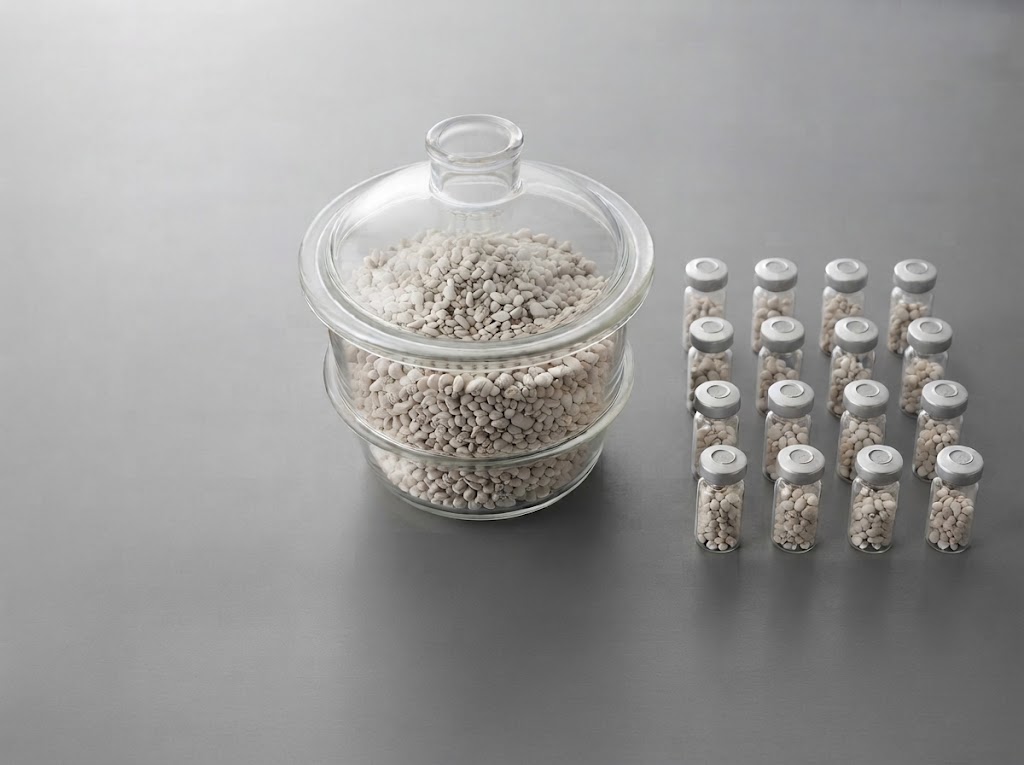
- Appearance: Dried Biological Tissue Powder or Dried Gland Material, depending on processing method
- Specification: To be confirmed according to supplier documentation
- Processing Method: Supplier-dependent; may include drying and preservation
- Packaging: 1 gram
- Storage: Follow the supplier’s product label and Safety Data Sheet or technical handling instructions.
Functional Applications
1. Induced Breeding in Aquaculture
Common Carp Pituitary (CCP) has a long history of use in induced breeding programs for common carp and other selected fish species. Its biological activity is associated with hormones involved in fish reproductive processes.
2. Fish Hatchery Operations
Professional hatcheries may use fish pituitary preparations as part of controlled broodstock management and reproductive programs. Suitability depends on the target species, maturity of broodstock, product potency, and hatchery protocols.
3. Aquaculture Research
Common Carp Pituitary (CCP) material has also been used in scientific research on fish reproductive physiology, induced spawning, and hatchery breeding methods.
Quality & Supply
Common Carp Pituitary (CCP) Product Information
| Parameter | Value |
|---|---|
| Product Name | Carp pituitary gland |
| Product Usage | Fish use oxytocin |
| Production Batch | / |
| Date of Manufacture | / |
| Color / Appearance | Milky white to pale yellow, Solid |
Ingredients and Proportions
| Component | Appr. % | CAS No. |
|---|---|---|
| Total protein/peptide (including active hormones) | 75-85 | / |
| Combining sugars | 5-10 | 3458-28-4 / 59-23-8 |
| Gonadotropins (GtH, FSH+LH) | 3-8 | 9002-68-0 / 9002-70-4 |
| Free amino acids (Mainly Arginine + Lysine) | 2-5 | 74-79-3 / 56-87-1 |
| Water | 1.5-3 | 7732-18-5 |
| Growth hormone (GH, fish) | 0.3-1.5 | 9002-72-6 |
| Prolactin (PRL, fish) | 0.2-0.8 | 9002-62-4 |
| Thyroid stimulating hormone (TSH, fish) | 0.1-0.5 | 9002-71-5 |
Quality Indicators
| Test Item(s) | Test Result |
|---|---|
| Appearance properties | Creamy white to pale yellow, no agglomeration, no mold, no odor, no visible foreign matter |
| Loss on Drying, % | ≤ 2.5 |
| Total protein, % | ≥ 75.0 |
| Gonadotropin potency, IU/mg | ≥ 100 |
| Sterility | No viable microorganisms detected |
| Bacterial Endotoxin, EU/mL | < 0.3 |
| Abnormal toxicity | No toxic reaction, test animals survived |
| Clarity/Suspendability | Suspension free of sediment and coarse particles, uniform upon gentle shaking |
| Heavy Metal Content, mg/kg | Not detected |
Important Notice
This is an animal-derived biological material intended for specialized aquaculture applications, not for human consumption or use as a dietary supplement.
Use should be determined by qualified aquaculture professionals in accordance with applicable veterinary, animal-health, and fisheries regulations. Product identity and biological activity should be verified through supplier documentation.
Technical References
- FAO — Fish Culture and Fishery Improvement: Propagation and Nursery of Common Carp
https://www.fao.org/4/AC555E/AC555E08.htm - FAO — Fish Culture in Undrainable Ponds: A Manual for Extension
https://www.fao.org/4/t0555e/T0555E08.htm - FAO — The Artificial Propagation of Warm-Water Finfishes: A Manual for Extension
https://www.fao.org/4/ac742e/AC742E04.htm