
1. Product Overview
Nervonic Acid (cis-15-tetracosenoic acid) is a vital omega-9 monounsaturated fatty acid. It has gained significant recognition in the global nutraceutical and pharmaceutical industries as a “brain nutrient.”
Unlike other fatty acids, it is a primary component of nerve cell membranes and white matter in the human brain. It is essential for the biosynthesis of nerve cell sphingolipids, playing a critical role in repairing and regenerating damaged nerve fibers and promoting the formation of the myelin sheath.
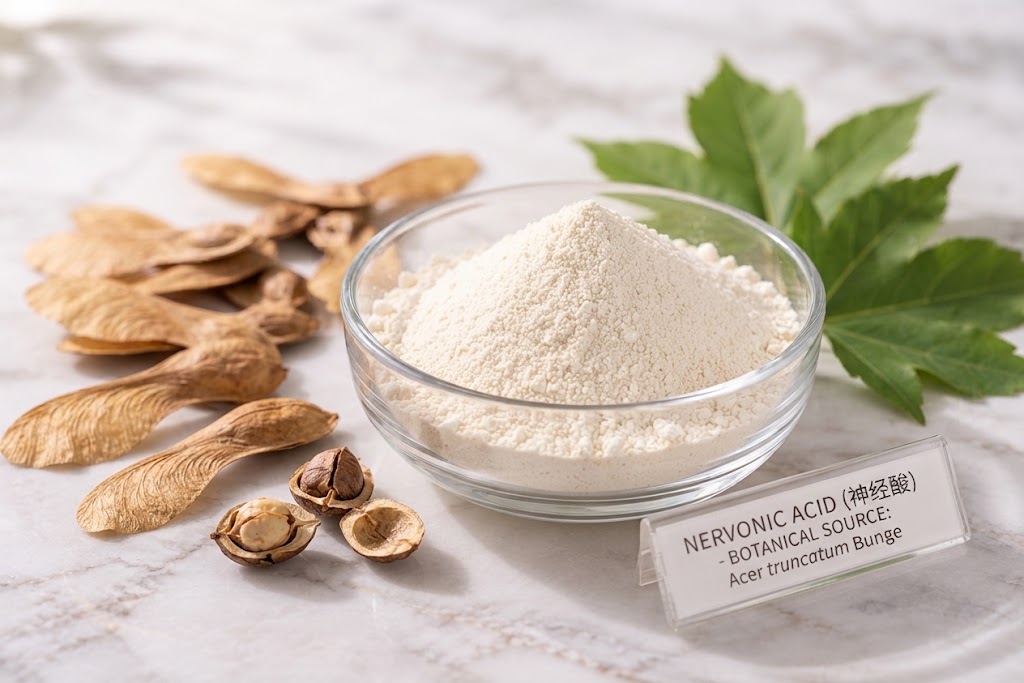
As the human body cannot synthesize sufficient amounts of Nervonic Acid on its own, supplementation is necessary, especially to support cognitive health as we age. We provide source from natural botanical extracts, ensuring maximum efficacy and stability for your formulations.
2. Product Specifications
| Item | Standard Specification |
|---|---|
| Appearance | White Powder |
| Assay (Nervonic Acid) | ≥ 90.0% – 98.0% (by HPLC) |
| Acid Value | ≤ 1.0 mgKOH/g |
| Peroxide Value | ≤ 2.0 meq/kg |
| Heavy Metals (Pb) | ≤ 1.0 ppm |
| Arsenic (As) | ≤ 1.0 ppm |
| Total Plate Count | ≤ 1000 CFU/g |
| Yeast & Mold | ≤ 100 CFU/g |
3. Functional Applications
Nervonic Acid’s unique ability to cross the blood-brain barrier makes it a powerful ingredient in several health sectors:
-
Cognitive Health Supplements: Formulations aimed at memory improvement, focus, and preventing age-related cognitive decline (e.g., Alzheimer’s and dementia support).
-
Infant & Children Nutrition: Added to advanced infant formulas and supplements to support early brain development and visual acuity.
-
Pharmaceutical Intermediates: Used in the synthesis of drugs designed to treat neurological disorders.
-
Functional Foods & Beverages: Enrichment for “brain-power” functional drinks and foods.
4. Formulation Combinations
Enhance the efficacy of Nervonic Acid by combining it with complementary ingredients. It synergizes well with:
-
DHA & EPA (Fish Oil): Provides structural components for the brain (DHA) alongside the repair mechanism (Nervonic Acid).
-
PS (Phosphatidylserine): Supports overall cognitive function and neurotransmitter health.
-
Ginkgo Biloba & Bacopa Monnieri: Improves cerebral blood flow to aid in the delivery of Nervonic Acid.
-
Vitamin B12 & Folic Acid: Supports methylation processes critical for nerve health.
5. Market Opportunities
The global demand for brain health ingredients is expanding rapidly due to an aging population and increased awareness of preventive healthcare among younger demographics.
-
Aging Demographics: The “Silver Economy” is driving sales of supplements for maintaining mental sharpness and combating neurodegenerative diseases.
-
“Smart Drug” Trend: Professionals and students are seeking natural nootropics to enhance focus and productivity.
-
Premiumization: Brands are moving beyond standard omega-3s and looking for scientifically backed, specialized fatty acids like Nervonic Acid to differentiate their product lines.
6. Quality & Supply
We are committed to providing the highest quality raw materials.
-
Certifications: Manufactured under cGMP, ISO 9001, and HACCP certified facilities.
-
Traceability: Full supply chain transparency from raw material source to final product.
-
Testing: Rigorous third-party lab testing for purity, heavy metals, and microbial safety.
-
Stability: Our Nervonic Acid exhibits excellent stability profile, suitable for various manufacturing processes.
-
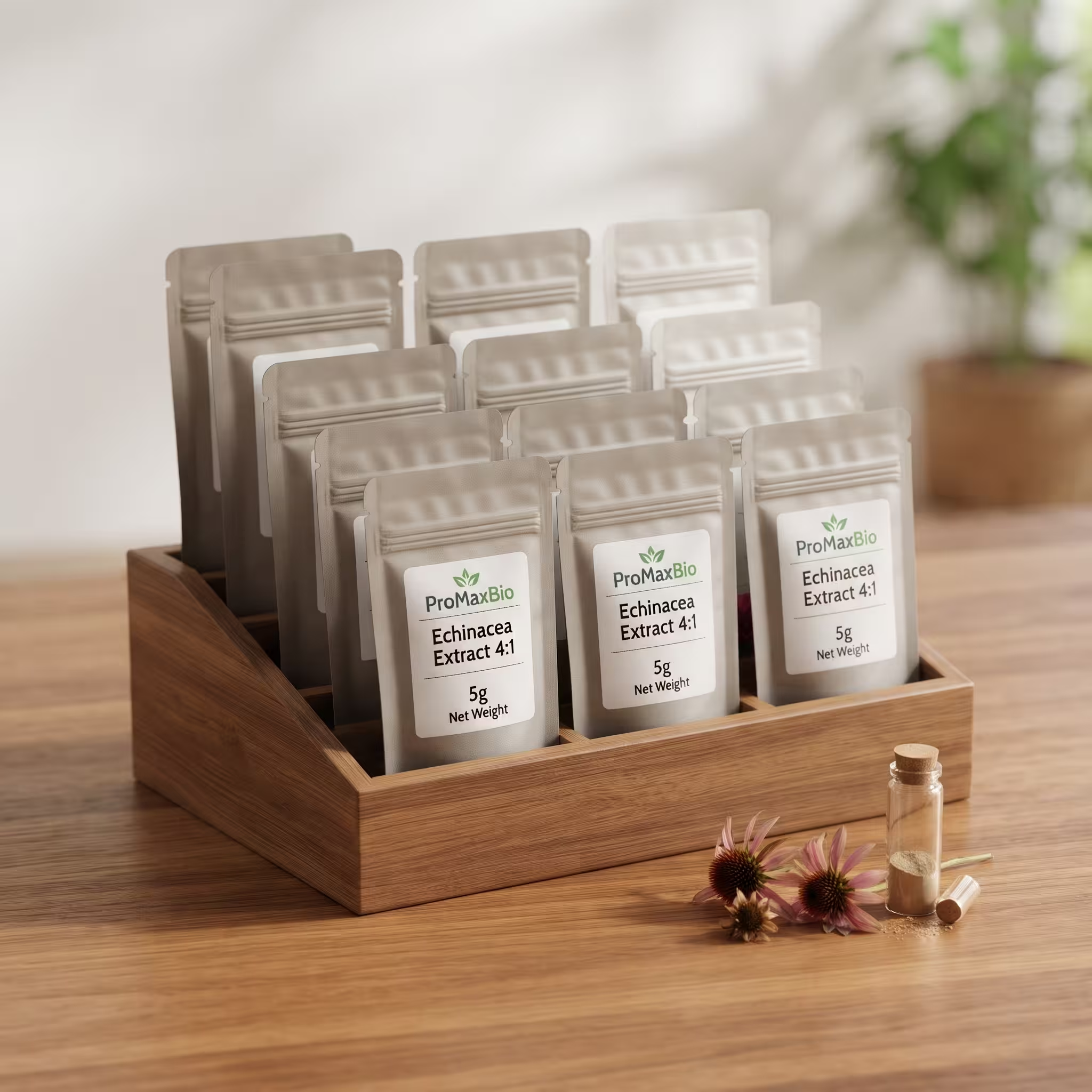
Packaging: Standardized packaging options available (e.g., 1kg foil bag, 20kg fiber drum) or customizable to your needs.
7. FAQ
Q: Is your Nervonic Acid natural or synthetic?
A: Our standard offering is 100% natural, derived from botanical sources (e.g., Acer truncatum).
Q: What is the recommended daily dosage?
A: While dosages vary based on the target application, typical clinical studies suggest a range of 100mg to 500mg of pure Nervonic Acid per day.
Q: Can I get a sample for R&D testing?
A: Yes, we provide samples to qualified B2B manufacturers and R&D facilities. Please contact our sales team to arrange a shipment.
Q: What are the storage conditions?
A: Store in a cool, dry place, protected from light and air. Keep sealed in original packaging.
8. References
-
PubMed: Nervonic acid and its sphingolipids: Biological functions and potential food applications
PubMed Central / NIH Database.
(Covers comprehensive biological functions, dietary sources, and metabolic pathways of nervonic acid.)
-
LIPID MAPS Structure Database: Nervonic Acid (LMFA01030092)
LMSD Official Repository.
(Provides formal nomenclature, exact chemical formulas, and structural characteristics.)
-
PubMed: Nervonic Acid and Demyelinating Disease (Sargent et al.)
Medical Hypotheses / Peer-Reviewed Literature.
(Discusses the foundational physiological role of nervonic acid in nerve fiber myelin sheath maintenance and neurological health.)