
Alpha-Arbutin (Purity ≥99.0%-99.5% HPLC / Free Hydroquinone ≤10 ppm / Biocatalytic Grade) | Gold Standard Glycoside Active for Human Tyrosinase Inhibition, Melasma Clearance & Spot Reduction
1. Product Overview & Value Proposition
Alpha-Arbutin (4-hydroxyphenyl α-D-glucopyranoside, α-熊果苷), synthesized through targeted enzymatic transglycosylation using bio-engineered microbial transferases, represents the premier clinical-grade glycosidic active in dermatological depigmentation, post-inflammatory spot correction, and aesthetic skin lightening. While historical cosmetic formulations relied on simple Beta-Arbutin extracted from bearberry foliage (Arctostaphylos uva-ursi), traditional beta-arbutin is limited by low biological potency and susceptibility to chemical hydrolysis into free hydroquinone under warm or acidic storage. In contrast, Alpha-Arbutin powder possesses an α-glucosidic linkage that matches the stereochemical binding geometry of the catalytic pocket of human tyrosinase, resulting in nine- to ten-fold higher tyrosinase-inhibitory activity than beta-arbutin at equivalent molar concentrations, accompanied by superior stability across clinical shelf-life cycles.
In human cutaneous melanogenesis, Alpha-Arbutin functions as a non-cytotoxic, reversible competitive inhibitor of tyrosinase, the rate-limiting copper-dependent enzyme that catalyzes both the hydroxylation of L-tyrosine into L-DOPA (monophenolase action) and the oxidation of L-DOPA into dopaquinone (diphenolase action). Unlike prescription hydroquinone—which functions via cytotoxic destruction of epidermal melanocytes and carries significant regulatory risks of permanent leukoderma and exogenous ochronosis—Alpha-Arbutin exerts zero cellular cytotoxicity at physiological dosages. It selectively downregulates melanosomal melanin biosynthesis without altering melanocyte viability or destroying cellular morphology. Concurrently, it reduces ultraviolet-induced melanosome accumulation in basal keratinocytes, suppresses liver spots (solar lentigines), clears post-inflammatory hyperpigmentation (PIH), and evens sallow complexions. Our bulk Alpha-Arbutin active delivers reliable manufacturing performance across key commercial categories:
- Clinical High-Potency Depigmentation & Spot Serums: Formulated up to the maximum European SCCS safety threshold of 2.0% to fade stubborn hormonal melasma, UV damage, and sunspots.
- Post-Acne PIH & Blemish-Clarifying Emulsions: Synergizes with Niacinamide, Tranexamic Acid, and Azelaic Acid to accelerate the fading of red-brown post-inflammatory macules without peeling or erythema.
- Clear Brightening Toners & Post-Procedure Sheet Masks: Rapid, spontaneous cold-water solubility produces 100% crystal-clear, non-sticky aqueous essences that soothe skin and prevent post-procedure pigment flares.
- Daily Radiance & Tone-Evening Body Lotions: Formulated at 0.5% (in accordance with SCCS guidelines) to treat body hyperpigmentation, friction discoloration, and uneven skin tone across large surface areas.
As an established bulk Alpha-Arbutin manufacturer and direct active ingredient supplier, our processing facilities operate closed-loop enzymatic bioreactors, automated continuous chromatography lines, and high-vacuum recrystallization systems. To empower agile skincare brands, cosmetic chemists, and contract manufacturing organizations (CMOs), we pair uncompromising analytical quality with flexible commercial terms: accessible low MOQ procurement for benchtop pilot trials, multi-ingredient shipment consolidation across our cosmetic bioactives (Glabridin, Ferulic Acid, Bakuchiol, Ectoine, L-Ergothioneine, PDRN, Ceramide NP), and dedicated on-the-ground China-wide raw material sourcing assistance tailored to your exact manufacturing requirements.
2. Product Specifications (Analytical Quality)
| Test Item | Standard Cosmetic Grade (≥99.0%) | Ultra-Pure Prestige Grade (≥99.5%) | Pharma / Reference Grade (≥99.8%) | Test Method |
|---|---|---|---|---|
| Chemical Identification | Conforms to authentic Alpha-Arbutin primary reference retention time and infrared spectrum | USP <197K> FTIR / HPLC-UV / 1H-NMR | ||
| Alpha-Arbutin Assay (Dry Basis) | ≥ 99.00% (HPLC-UV) | ≥ 99.50% (Clinical Target) | ≥ 99.80% | HPLC-UV (at 280 nm) |
| Free Hydroquinone (Safety Limit) | ≤ 10.0 ppm (SCCS Compliant) | ≤ 5.0 ppm | ≤ 2.0 ppm / Non-detectable | HPLC-DAD / GC-MS Trace Method |
| Beta-Arbutin Isomer Content | ≤ 0.50% | ≤ 0.20% | ≤ 0.10% / Non-detectable | HPLC-UV (Reversed-Phase Baseline) |
| Specific Optical Rotation [a]²°_D | +174.0° to +186.0° (c = 1 in water, confirms pure α-configuration) | USP <781S> Polarimetry | ||
| Melting Point Range | 202.0°C – 206.0°C | 203.0°C – 206.0°C | 204.0°C – 206.5°C | Capillary Melting Apparatus |
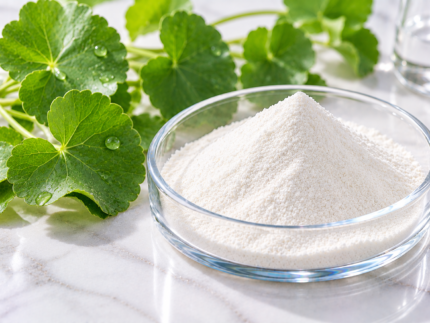
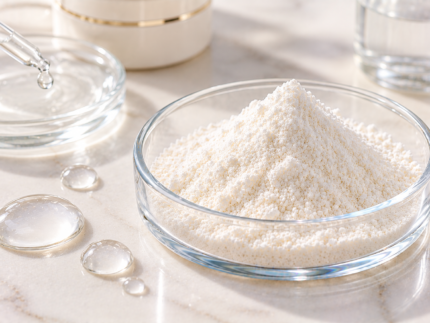
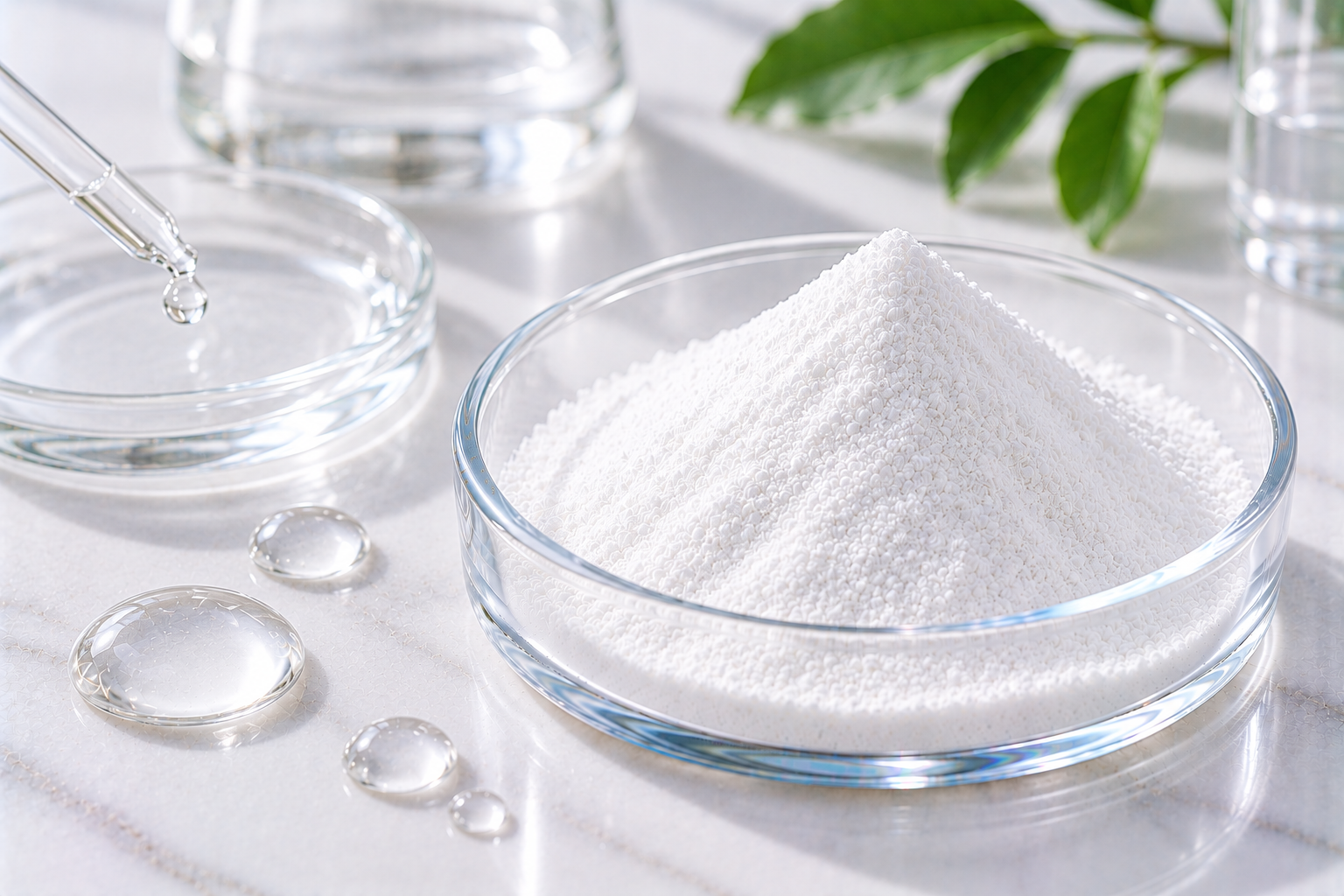
| Appearance & Color | White to off-white crystalline powder | Pure snow-white microcrystalline powder | Pure white microcrystalline powder | Visual / Organoleptic |
| Odor & Sensory Fingerprint | Practically odorless; neutral, clean sensory profile; zero phenolic solvent note | Organoleptic | ||
| Aqueous Clarity & Solubility | 100% freely soluble in water (~150 g/L; forms a crystal-clear, colorless solution; NTU < 2.0) | Visual / Turbidimetry | ||
| pH (1% Aqueous Solution) | 5.0 – 7.0 (at 25°C) | USP <791> Potentiometry | ||
| Particle Size | 100% passing 80 mesh (Ultra-fine 100 mesh available for fast dissolution) | Sieve Analysis | ||
| Loss on Drying / Moisture | ≤ 0.50% | ≤ 0.20% | USP <731> (105°C) | |
| Residue on Ignition (Ash) | ≤ 0.20% | ≤ 0.10% | USP <281> (600°C) | |
| Heavy Metals (Pb) | < 1.0 ppm (As < 1.0 ppm, Cd < 0.5 ppm, Hg < 0.1 ppm; Prop 65 compliant) | ICP-MS | ||
| Residual Solvents (Ethanol, Methanol) | ≤ 3,000 ppm Ethanol; Methanol ≤ 50 ppm / Non-detectable (Meets USP <467>) | GC-HS | ||
| Microbiological Limits | Total Aerobic Microbial Count ≤ 100 CFU/g; Yeast & Mold ≤ 10 CFU/g; Pathogens Absent | USP/EP Standard | ||
3. Functional Applications (Mechanism of Action)
Deploying pharmaceutical-grade Alpha-Arbutin across clinical brightening serums, post-blemish corrective treatments, and daily photo-defense formulations provides scientifically verified cellular actions:
- Competitive Enzymatic Blockade of Human Tyrosinase: Alpha-Arbutin binds reversibly to the catalytic active site of human tyrosinase. It competitively blocks the entry of the natural substrate L-tyrosine, suppressing the sequential enzymatic conversions of tyrosine to L-DOPA and L-DOPA to dopaquinone. Biochemical kinetic studies verify that Alpha-Arbutin exhibits an inhibitory constant (Ki) approximately ten times lower than that of Beta-Arbutin, providing superior pigment suppression at significantly lower usage levels.
- Non-Cytotoxic, Melanocyte-Sparing Safety: Unlike pharmaceutical hydroquinone—which induces intracellular reactive oxygen species, damages melanosomal membranes, and causes permanent melanocyte apoptosis (leading to leukoderma and ochronosis)—Alpha-Arbutin inhibits tyrosinase activity without altering melanocyte viability or inhibiting cellular proliferation. Melanin production resumes normally once topical application ceases, ensuring high long-term dermatological safety.
- Downregulation of Melanosome Maturation & Transfer: In co-culture models of human melanocytes and keratinocytes, Alpha-Arbutin suppresses melanosome maturation from stage II to stage IV. It reduces melanin pigment loading into outgoing dendrites, lowering the total quantity of melanin transferred into basal keratinocytes and preventing epidermal hyperpigmentation.
- Mitigation of Solar Lentigines & UV-Induced Melasma: Ultraviolet radiation stimulates keratinocytes to release alpha-melanocyte-stimulating hormone (α-MSH) and endothelin-1, triggering melanogenesis cascades. Alpha-Arbutin blocks this downstream enzymatic surge, preventing solar lentigines (sunspots), suppressing melasma flare-ups, and brightening overall skin tone.
- Rapid Clearance of Post-Inflammatory Hyperpigmentation (PIH): Following acne flares or clinical procedures (chemical peels, laser resurfacing), residual micro-inflammation stimulates melanocyte hyperactivity, leaving behind localized brown marks. Alpha-Arbutin suppresses this localized enzymatic spike, accelerating PIH fading and restoring an even complexion.
- Superior Hydrolytic Stability Over Beta-Arbutin: The α-glucosidic bond in Alpha-Arbutin is significantly more resistant to chemical cleavage by cutaneous β-glucosidase enzymes and acidic hydrolysis than the β-glucosidic bond of beta-arbutin. When maintained within the optimal pH window (pH 4.5 to 6.5), Alpha-Arbutin remains chemically intact over long-term shelf storage, preventing degradation into free hydroquinone.
4. Formulation Combinations & Trending Market Applications
Capitalize on the expanding clinical brightening, aesthetic post-procedure, and clean beauty markets by formulating with our versatile Alpha-Arbutin portfolio:
- The Master Clinical “Quadruple Depigmentation & Melasma” Serum: Our Alpha-Arbutin (≥99.5%, 2.0%) + Niacinamide (≥99.5%, 4.0%–5.0%) + Tranexamic Acid (USP, 2.0%–3.0%) + Ethyl Ascorbic Acid (Lipophilic Vitamin C, 2.0%) + Sodium Hyaluronate (0.5%). The globally recognized benchmark dermatological formula: Alpha-Arbutin blocks tyrosinase catalytic activity, Tranexamic Acid inhibits plasmin-induced melanocyte activation, Niacinamide prevents melanosome transfer to keratinocytes, and Vitamin C reduces existing oxidized melanin.
- The “Post-Blemish Clarifying & PIH Eraser” Fluid: Our Alpha-Arbutin (≥99.5%, 1.5%) + Azelaic Acid Derivative (Potassium Azeloyl Diglycinate, 3.0%) + Glabridin (CWS Water-Soluble 10%, 0.5% delivering 0.05% active) + Zinc PCA (1.0%) + Centella Asiatica Extract (Madecassoside ≥95%, 0.2%). A targeted clarifying emulsion designed to dissolve follicular blemishes, regulate sebum, soothe post-inflammatory erythema (PIE), and erase post-acne dark spots (PIH).
- The “SCCS-Compliant Radiance & Tone-Evening” Body Lotion: Our Alpha-Arbutin (≥99.0%, 0.5% SCCS Maximum Body Limit) + Lactic Acid (AHA, 5.0%) + Ceramide NP (≥98%, 0.1%) + Shea Butter (3.0%) + D-Panthenol (Vitamin B5, 1.0%). A daily full-body exfoliating and brightening lotion engineered to smooth keratosis pilaris, reinforce the skin barrier, and even out friction-induced hyperpigmentation across elbows, knees, and underarms.
- The “Post-Procedure Soothing & Brightening” Essence Mask: Our Alpha-Arbutin (≥99.5%, 1.0%) + PDRN (Sodium DNA ≥98%, 0.2%) + Ectoine (≥99.0%, 1.0%) + Madecassoside 95% (0.2%) + Multi-Molecular Weight Hyaluronic Acid (1.0%). A high-tolerance sheet mask essence designed for post-laser or post-peel recovery to soothe procedural heat, protect the stratum corneum, and prevent rebound post-inflammatory hyperpigmentation.
5. Why Choose Us As Your Long-Term Active Ingredient Partner?
- Flexible Low MOQ Policy: Mitigate product development risk. As an agile low MOQ Alpha-Arbutin bulk supplier, our orders start as low as 1 kg for high-purity cosmetic grades (≥99.0%–99.5%), scaling smoothly up to recurring multi-ton commercial container contracts.
- Guaranteed Hydroquinone Safety (≤ 10 ppm): Residual hydroquinone is the primary regulatory and safety concern in arbutin sourcing. Every commercial batch is tested using validated trace HPLC-DAD and GC-MS to ensure free hydroquinone remains strictly ≤ 10 ppm (and ≤ 5 ppm for premium grades), fully complying with European SCCS/1642/22 directives.
- Multi-Product Portfolio Consolidation: Streamline your supply chain by sourcing your complete brightening and barrier active suite (Alpha-Arbutin, Glabridin, Ferulic Acid, Phloretin, Ceramide NP, Madecassoside, Bakuchiol, Ectoine, L-Ergothioneine, PDRN), longevity vitamins (L-5-MTHF-Ca, β-NMN), and botanical extracts under a single, cost-effective freight shipment to reduce customs overhead and landed freight costs.
- Value-Added China Sourcing Service: In addition to our dedicated enzymatic synthesis lines and high-vacuum crystallization suites, our on-the-ground technical team audits upstream biocatalytic enzyme production, validates HPLC chiral purity testing paperwork, and procures specialized functional ingredients across China tailored to your exact manufacturing roadmap.
6. Quality & Supply Chain Assurance
- Biocatalytic Enzymatic Synthesis: Synthesized via clean enzymatic transglycosylation using immobilized enzymes, coupling natural hydroquinone with food-grade glucosyl donors (such as dextrin or sucrose). This enzymatic route produces 100% pure α-anomer without hazardous petrochemical catalysts, protecting against mutagenic side-reaction artifacts.
- Strict Free Hydroquinone Monitoring: Unreacted hydroquinone is removed using continuous multi-stage resin adsorption and vacuum recrystallization. Every production batch is certified with an individual Certificate of Analysis (COA) documenting free hydroquinone ≤ 10 ppm (typically < 3 ppm), preventing regulatory rejection across the European Union, United States, and Asia-Pacific markets.
- 100% α-Stereoisomer Verification: Tested via specific optical rotation ([α]²°_D = +174.0° to +186.0°) and reversed-phase HPLC. We verify complete absence of the weaker, levorotatory β-isomer, guaranteeing authentic α-anomeric structure and maximum biological tyrosinase-inhibition potency.
- Complete Water Solubility & Crystal Clarity: Engineered for water-phase formulation: Alpha-Arbutin dissolves rapidly in room-temperature water (~150 g/L at 25°C) without heating, forming an optically clear, transparent solution (NTU < 2.0) that remains stable without clouding, browning, or precipitating over long-term shelf storage.
- Comprehensive ICP-MS & Heavy Metal Screening: Batch-tested via high-resolution ICP-MS to ensure heavy metals (Lead, Arsenic, Cadmium, Mercury) strictly comply with California Prop 65, European Cosmetic Regulation (EC) No 1223/2009, and China Safety and Technical Standards for Cosmetics. Sealed in food/pharma-grade double-polyethylene liners within light-proof, moisture-barrier fiber drums (25 kg).
7. FAQ
Q1: What is the primary functional and chemical difference between Alpha-Arbutin and Beta-Arbutin?
A1: While both are hydroquinone glucosides, their glycosidic linkages, biological efficacy, and safety profiles differ fundamentally:
- Alpha-Arbutin (4-Hydroxyphenyl α-D-glucopyranoside): Features an α-anomeric glycosidic linkage synthesized via precision enzymatic biocatalysis. It is dextrorotatory ([α]D ~ +180°). It fits precisely into the active catalytic site of human tyrosinase, exhibiting approximately ten times greater inhibitory potency than beta-arbutin, alongside significantly greater hydrolytic stability against skin β-glucosidase enzymes.
- Beta-Arbutin (4-Hydroxyphenyl β-D-glucopyranoside): Features a β-anomeric glycosidic linkage extracted from bearberry (*Arctostaphylos uva-ursi*) or synthesized chemically. It is levorotatory ([α]D ~ -66°). It requires significantly higher dosages to achieve clinical lightening and hydrolyzes more readily into free hydroquinone under warm or acidic conditions.
Q2: What are the European SCCS regulatory safety limits for Alpha-Arbutin in cosmetics?
A2: In its final opinion (SCCS/1642/22), the European Scientific Committee on Consumer Safety concluded that Alpha-Arbutin is safe for consumers in cosmetic products under the following conditions:
- Face Creams & Serums: Safe up to a maximum concentration of 2.0%.
- Body Lotions: Safe up to a maximum concentration of 0.5%.
- Free Hydroquinone Threshold: The residual hydroquinone level in the raw ingredient must remain strictly below 10 ppm and should not increase to unsafe levels throughout finished product shelf life. Our bulk Alpha-Arbutin complies with these European specifications.
Q3: How should formulators protect Alpha-Arbutin from hydrolyzing into free hydroquinone in finished cosmetics?
A3: To maintain long-term chemical stability and prevent hydrolytic cleavage into free hydroquinone, cosmetic chemists follow three primary formulating rules:
- pH Management: Buffer the finished formulation within a pH range of 4.5 to 6.5. Formulations with pH < 4.0 or pH > 8.0 can accelerate glycosidic bond hydrolysis over time.
- Temperature Control: Add Alpha-Arbutin during the cool-down phase below 50°C (preferably below 40°C). Avoid prolonged exposure to temperatures above 60°C during emulsion heating.
- Antioxidant Stabilization: Incorporate water-soluble antioxidants (such as 0.1%–0.2% sodium metabisulfite, sodium bisulfite, or chelating agents like disodium EDTA) to protect the phenolic core from oxidative yellowing.
Q4: What is the recommended usage percentage of Alpha-Arbutin in finished skincare products?
A4: Formulating percentages vary by delivery format and target application:
- Clinical Facial Brightening & Spot Serums: 1.0% to 2.0% (2.0% is the clinical benchmark maximum for intense spot fading).
- Daily Tone-Evening Lotions & Moisturizers: 0.5% to 1.0%.
- Full-Body Whitening & Hand Care Lotions: 0.2% to 0.5% (compliant with the 0.5% SCCS body limit).
- Clear Essence Toners & Sheet Masks: 0.5% to 1.0% (dissolves cleanly in water without clouding).
Q5: What is the MOQ for bulk Alpha-Arbutin orders?
A5: We support agile product commercialization with flexible minimum order quantities starting from just 1 kg for ultra-pure cosmetic grades (≥99.0%–99.5%), scaling smoothly up to recurring multi-ton commercial container contracts.
8. References
- PubChem: Alpha-Arbutin Compound Summary (CID 44256715) – National Center for Biotechnology Information.
- European Commission Scientific Committee on Consumer Safety (SCCS): Opinion on Alpha-Arbutin and Beta-Arbutin (SCCS/1642/22) – European Union Public Health.
Keywords you may search: bulk Alpha-Arbutin supplier, alpha arbutin powder 99.5 percent HPLC, free hydroquinone under 10ppm arbutin, SCCS compliant skin brightening raw material, tyrosinase inhibitor cosmetic active, water soluble alpha arbutin bulk, melasma spot fading cosmetic ingredient, enzymatic biocatalytic alpha arbutin, low MOQ cosmetic raw material provider, custom China ingredient sourcing service, pure alpha arbutin bulk