
Acetyl Hexapeptide-8: Specifications and Formulation Considerations for Cosmetic Buyers

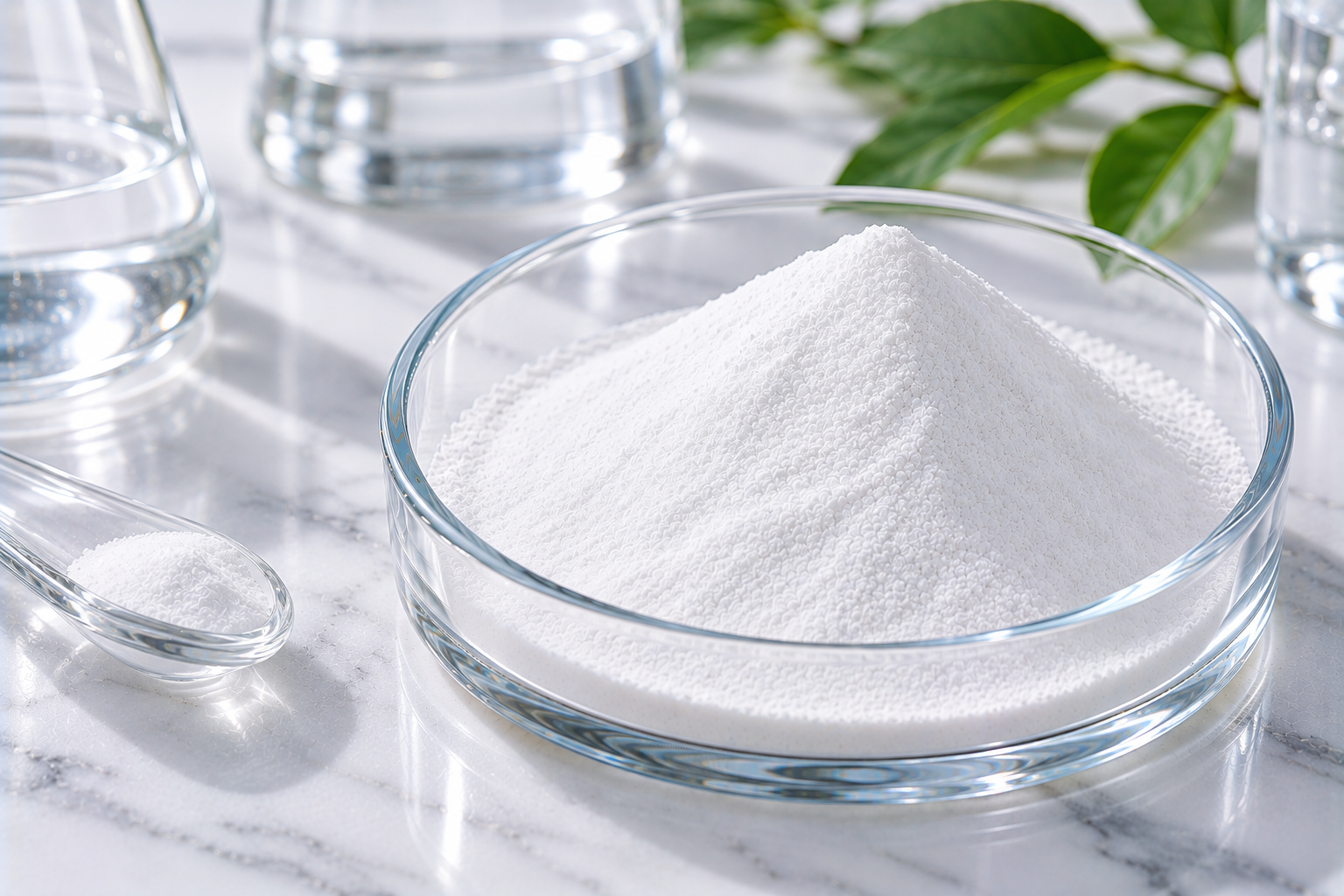
Acetyl Hexapeptide-8 is a familiar name in cosmetic peptide sourcing, particularly for products positioned around the appearance of expression lines. However, a concentrated peptide powder and a prepared commercial solution are different ingredients to purchase and formulate. Buyers should establish identity, actual peptide content, composition, and supporting evidence before comparing quotations.
Confirm the Exact Ingredient
Request the ingredient declaration, chemical identity, and complete composition of the offered grade. Documentation should distinguish the peptide itself from a preparation containing water, preservatives, carriers, or delivery-system components.
Argireline is a branded ingredient family associated with Acetyl Hexapeptide-8. A generic peptide should not be represented as that branded material without verified authorization and supply documentation. Likewise, matching an ingredient name does not establish equivalence to a particular commercial formulation or research sample.
Separate Chromatographic Purity from Content
An HPLC purity percentage can describe the relative chromatographic profile under the stated method. It should not automatically be interpreted as the peptide’s weight percentage in the entire supplied material. Water, salts, counterions, and other components may require separate consideration.
Ask for a defined peptide-content assay, analytical method, reporting basis, and relevant impurity information. Where a powder is offered, clarify moisture and composition. Where a solution is offered, request the actual peptide concentration instead of relying only on the solution’s recommended addition rate.
Calculate the Finished-Formula Contribution
Adding 5% of a commercial preparation does not necessarily mean the finished product contains 5% pure peptide. For example, a hypothetical solution containing 0.05% peptide contributes 0.0025% peptide when used at 5% in a formula, equivalent to approximately 25 ppm.
This calculation is illustrative, not a specification for any named supplier or a recommended use level. Use the verified content of your selected grade, then confirm the proposed inclusion level through formulation guidance, safety assessment, and market requirements.
Evaluate the Delivery System
Published experimental work found that emulsion composition affected Acetyl Hexapeptide-8 delivery into porcine skin. This supports evaluating the complete vehicle rather than assuming that any cream or serum containing the same peptide will perform identically.
Commercial preparations also differ in their carrier systems. Supplier documentation describes aqueous versions and an oil-compatible version using a specific delivery system. These properties belong to the defined preparation; they should not be transferred automatically to an unformulated peptide powder.
Review Claims and Evidence Carefully
Assess the tested material, concentration, vehicle, study population, comparator, and measurement method. Laboratory penetration findings do not independently establish a clinical wrinkle-reduction outcome for your finished product.
A cosmetic peptide should not be presented as equivalent to an injectable botulinum toxin treatment. Develop appearance-related claims only where evidence supports the actual formulation and intended use. Avoid copying performance percentages from another supplier’s study without confirming relevance and permission.
Plan Compatibility and Stability Trials
Request grade-specific guidance on pH, processing temperature, incorporation, and storage. Evaluate compatibility with preservatives, electrolytes, other peptides, and the selected base using representative samples.
Check appearance, odor, dispersion, viscosity, and retained peptide content where appropriate during stability work. An unopened ingredient’s shelf life does not establish the shelf life of a finished serum. Preservation testing and packaging compatibility should be addressed separately for the complete cosmetic.
Use a Clear Purchasing Checklist
Before ordering, request:
- Exact identity and complete ingredient composition.
- Peptide-content assay and chromatographic purity where relevant.
- Defined methods, units, and reporting basis.
- Batch-specific COA and relevant microbiological or impurity limits.
- Storage, handling, and shelf-life documentation.
Compare costs using the verified peptide contribution and complete development scope. Confirm certification claims separately from batch-specific testing, and review labeling requirements for the destination market.
Discuss Your Requirements on Acetyl Hexapeptide-8 with ProMaxBio
Contact ProMaxBio with your preferred material format, target peptide content, application, and destination market. Request current specifications and confirm available grades before ordering. For related sourcing considerations, read our cosmetic ingredient overview.
References: experimental emulsion-delivery study; example of a defined commercial delivery system.