
Spermidine Ingredients: Wheat Germ Extract vs. High-Purity Grades

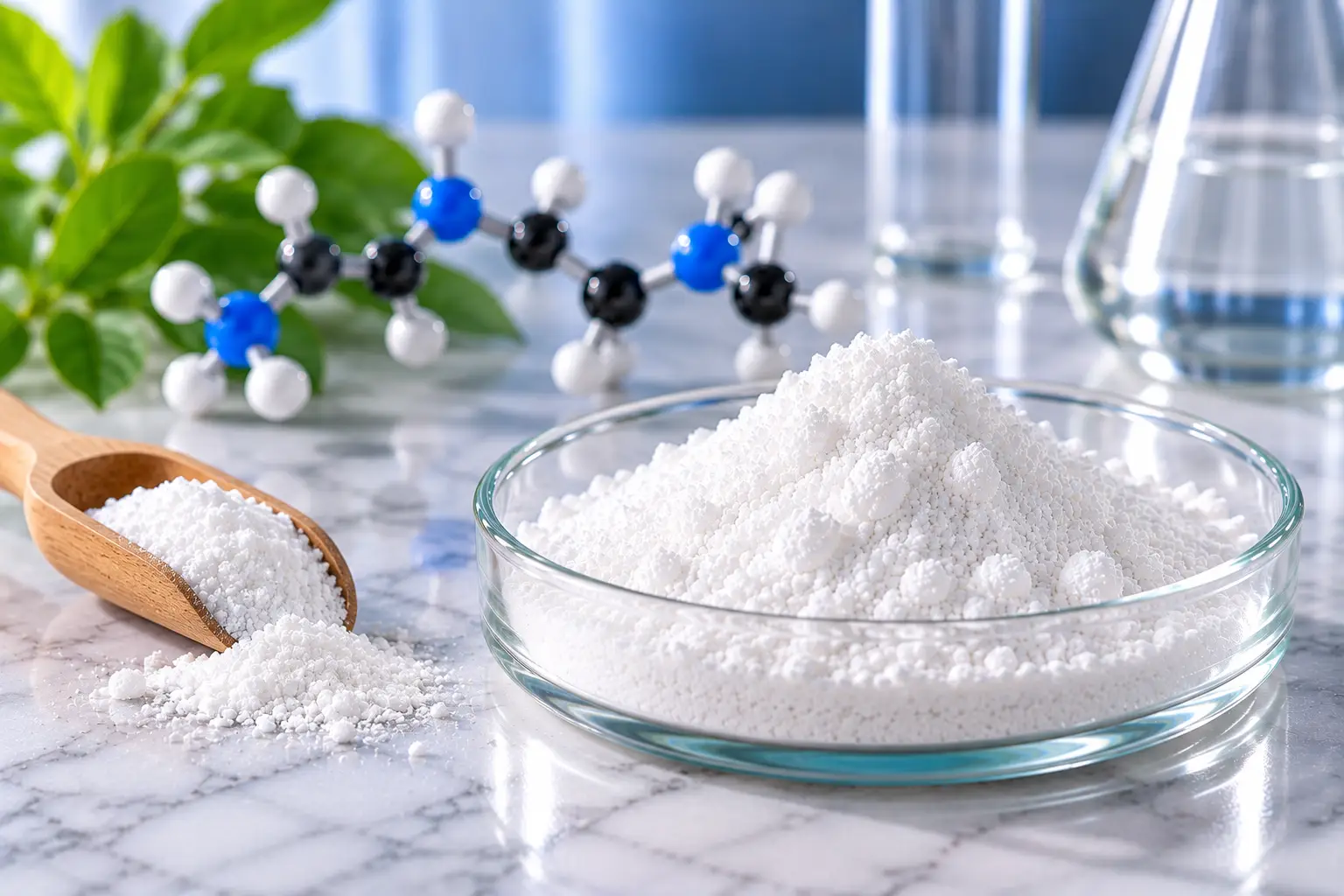
Spermidine ingredients are discussed in healthy-aging product development, but purchasing specifications can describe very different materials. A spermidine-rich wheat germ extract is not equivalent to a highly purified compound or its salt. Buyers should establish identity, assay basis, composition, and intended use before comparing prices or planning a formulation.
Start with Source and Chemical Form
Ask whether the proposed ingredient is a botanical extract, a purified material, or a salt such as spermidine trihydrochloride. Obtain the exact product identity, production route, and composition statement. A generic “spermidine powder” description is insufficient for qualification.
For wheat germ extract, confirm the botanical source, extraction process, carriers, and relevant allergen information. For a purified grade, clarify chemical form and impurities. A claim of plant origin or fermentation origin requires supporting documentation; high purity alone does not establish how the ingredient was produced.
Compare Assays on the Same Basis
Specifications such as “1%” and “98% purity” may refer to different analytical quantities. Ask whether the result measures spermidine content, compound purity, or the salt as supplied. Clarify moisture corrections, units, and whether the assay is on a dry basis.
If a salt is supplied, its mass includes the counterions. The amount expressed as spermidine must therefore be distinguished from the amount of the full salt. Request a defined conversion basis rather than assuming equal weights supply equal amounts of spermidine.
Calculate Ingredient Mass Before Formulating
A verified 1% extract contains approximately 10 mg spermidine per gram of material. On that basis, 100 mg of extract contributes approximately 1 mg. A 2% extract would require approximately 50 mg to supply the same constituent amount.
These are composition calculations, not dosage recommendations. Use verified assays to estimate capsule capacity, blend proportions, and cost per serving. Include any carriers and other ingredients in the calculation, and establish the permitted serving amount separately for the intended market.
Evaluate Evidence Without Overstating Benefits
Published human studies should be reviewed in the context of their exact materials and protocols. In the 12-month SmartAge randomized trial involving 100 older adults with subjective cognitive decline, a spermidine-rich wheat germ supplement did not significantly improve the primary memory outcome compared with placebo.
This result does not settle every research question, but it illustrates why marketing claims should not rely only on mechanistic discussions or preliminary findings. Evidence from a particular extract cannot automatically substantiate a different purified ingredient, salt, dose, or finished combination product.
Build a Supplier Qualification Checklist
Before placing an order, request:
- Exact identity, source, chemical form, and complete composition.
- Spermidine assay with method, units, and reporting basis.
- Batch-specific COA and relevant impurity or contaminant results.
- Allergen declarations and other origin statements where applicable.
- Storage instructions, packaging, and shelf-life support.
Ask whether the method distinguishes spermidine from other polyamines and whether it is suitable for the offered matrix. Compare multiple batches where possible. Verify certification claims against the manufacturing facility and covered activities; a quality-system certificate does not replace material-specific testing.
Check Regulatory Fit and Manufacturing Performance
The EU has a specific novel-food entry for spermidine-rich wheat germ extract. That entry should not be assumed to cover every high-purity spermidine material or salt. Confirm the current authorization, composition, use conditions, and labeling requirements applicable to the proposed ingredient and destination market.
Evaluate representative samples for handling properties, blend uniformity, and stability in the intended product. Small inclusion amounts may require particular attention to mixing and verification. Agree on a practical specification before approving a manufacturing trial.
Discuss Your Specification with ProMaxBio
Contact ProMaxBio with your preferred source, chemical form, target assay, delivery format, and destination market to discuss sourcing requirements. Request current documents for any proposed grade and confirm availability before ordering. For finished-product development, explore our OEM and private-label services.
References: SmartAge randomized clinical trial; EU specification amendment for spermidine-rich wheat germ extract.